

What if the secret to a kalanchoe that blooms again isn’t more attention, but a steadier routine? Kalanchoe plant care can feel confusing when a new plant’s leaves soften or its bright flowers fade soon after you bring it home. A few thoughtful adjustments to light, watering, and seasonal rest can make its needs easier to understand.
It’s natural to wonder whether fading blooms mean you’ve done something wrong or whether the plant can flower again. Start by knowing what to change and what to leave alone. Kalanchoe prefers bright light and a careful dry-down between waterings, not a constantly damp pot.
This guide walks you through a practical routine for a New York home, from choosing a bright indoor spot to spotting signs of watering stress. You’ll learn how to respond when leaves or flowers decline and how seasonal darkness can encourage another bloom. With a little patience, this cheerful plant can bring fresh color and a welcoming touch to your home.
Key Takeaways
- Build kalanchoe plant care around its needs as a flowering succulent, rather than treating it like a thirsty leafy houseplant.
- Use changes in leaves, stems, and flowers as clues, then choose a sensible first adjustment instead of assuming one cause.
- Support a possible new bloom by creating longer, uninterrupted nights under the right seasonal conditions.
- Adapt your plant’s indoor position as New York’s light changes, and keep an eye on soil dryness and drainage.
What Is a Kalanchoe, and What Does It Need to Thrive Indoors?
Kalanchoe care is manageable when you keep two basics steady: give the plant suitable light and avoid watering before it needs it. That’s a good starting point for kalanchoe plant care, especially if you’re used to leafy houseplants that prefer more frequent drinks. Kalanchoes are flowering succulents, and their thick leaves hold moisture between waterings.
A kalanchoe is a flowering succulent with water-storing leaves, so it thrives with careful watering rather than constantly moist soil. The name refers to a diverse plant group, not one identical care profile. The familiar florist kalanchoe is Kalanchoe blossfeldiana, prized for its clusters of small, vivid flowers. Other species can look and grow differently, so care details may vary.
For a general overview of the genus and its characteristics, see Kalanchoe. For an indoor plant owner, the useful takeaway is simple: identify the kind you have when possible, then observe how it responds to its surroundings. A thriving plant isn’t made by following a rigid formula. Match care to the plant in front of you.
How to Recognize a Flowering Kalanchoe
Look for fleshy, often glossy leaves and a compact shape, with flower clusters held above the foliage. The best-known flowering type, K. blossfeldiana, is commonly sold in bloom and brings a bright accent to a windowsill or table. Its flowers may fade after the display, while the leafy plant remains.
Not every kalanchoe looks the same. Leaf shape, growth habit, and flowering can differ across the group, so don’t assume every species has precisely the same needs. If you’re unsure of the type, focus first on its visible condition and how quickly its potting mix dries.
Why Indoor Care Starts with Its Succulent Nature
Succulent leaves help kalanchoe manage periods between waterings, but persistently wet soil can cause problems. A pot that stays damp can deprive roots of the conditions they need and may contribute to soft or declining growth. Unlike thirstier foliage plants, kalanchoe doesn’t need soil kept continually moist.
It also helps to separate two goals. Healthy foliage depends on meeting the plant’s everyday needs; repeat flowering involves additional seasonal cues covered later in this guide. A finished flower display doesn’t automatically mean the plant is dead. If the leaves and stems remain healthy, the kalanchoe may simply be between flowering periods, still adding a fresh, living touch to your home.
Kalanchoe Light, Water, Soil, and Temperature: The Care Essentials
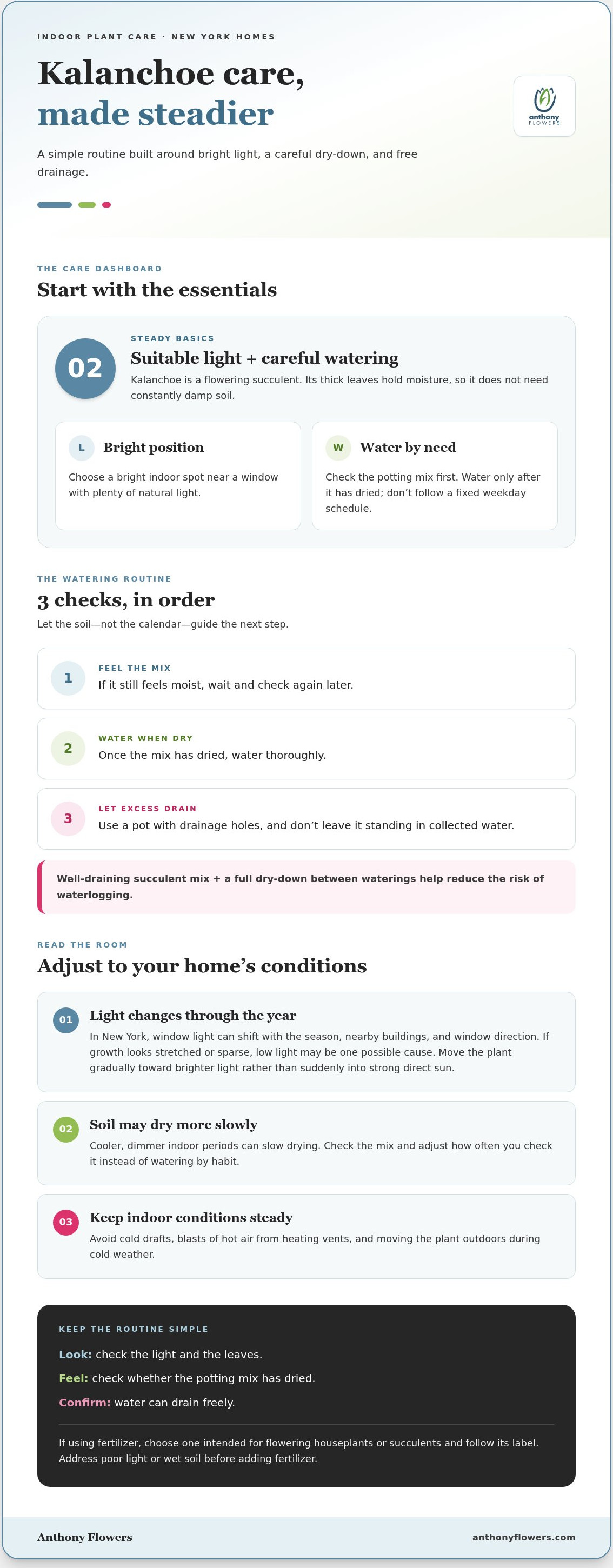
Good kalanchoe plant care is less about following a strict calendar and more about noticing what your plant and its pot are telling you. A bright spot, soil that dries between waterings, and free drainage work together. Check the plant regularly, but make changes gradually so it can adjust to your home.
How Much Light Does a Kalanchoe Need?
Choose a bright indoor position, such as near a window where the plant gets plenty of natural light. In a New York home, light through a window can shift with the season, nearby buildings, and the window’s direction. If growth becomes stretched or sparse, insufficient light may be one possible reason. Observe first, then move the plant a little closer to brighter light rather than shifting it suddenly into strong direct sun.
When to Water and What Soil to Use
Check the potting mix before watering instead of assigning the plant a fixed day of the week. If the mix still feels moist, wait and check again later. If it has dried, water thoroughly and let the excess drain away. A well-draining succulent potting mix is a suitable starting point, paired with a pot that has drainage holes. Well-draining soil and a full dry-down between waterings help reduce the risk of waterlogging. Don’t leave the pot standing in collected water.
For more guidance on light, moisture, soil, and growing conditions, consult NC State Extension’s Kalanchoe care essentials. Before watering, feel the mix, look for water in the saucer, and consider whether the pot has been drying more slowly than usual. Cooler, dimmer periods indoors can mean the mix takes longer to dry, so adjust your checks rather than watering by habit.
Temperature and Feeding Without Overcomplicating Care
Stable indoor conditions are easier for a kalanchoe to manage than sudden temperature swings. Keep it away from cold drafts and from spots that receive blasts of hot air from heating vents. As light and indoor conditions change through the year, watch how quickly the soil dries and how the plant responds. Avoid moving it outdoors during cold weather; this guide focuses on growing it inside.
Feeding doesn’t need to become another complicated task. If you choose to use fertilizer, select one intended for flowering houseplants or succulents and follow its label directions. Avoid adding extra in an attempt to force growth. A plant that’s struggling with wet soil or poor light needs those conditions addressed first, not more fertilizer.
Keep the routine simple: check the light and soil, confirm that water can drain freely, and notice changes in the leaves or growth. These observations help you adjust care to your home instead of relying on a one-size-fits-all schedule. To add another leafy accent to your space, explore Anthony Flowers’ plant selection.
Kalanchoe Problems: What Yellow Leaves, Drooping, or Sparse Growth Can Signal
A change in your kalanchoe’s appearance is a clue, not a diagnosis. Before changing its care, check the soil, drainage, light, and leaves for visible pests. Several issues can cause similar symptoms, so adjust one thing at a time and watch for new growth rather than expecting damaged leaves to recover.
| Symptom | Possible cause | First action |
|---|---|---|
| Yellow or soft leaves | Soil staying wet, poor drainage, or another source of stress | Check the potting mix and drainage holes before adding water. |
| Persistent drooping | Soil that is too dry or too wet, root stress, or a sudden change in conditions | Feel the soil and inspect the pot; don’t water automatically. |
| Sparse or stretched growth | Insufficient light is one possibility | Assess the plant’s light and make any move gradually. |
| Flowers fading | A finished bloom cycle or changes in growing conditions | Check whether the foliage and stems remain healthy. |
What Yellow or Soft Leaves May Mean
Yellowing or softness can occur when the mix stays damp, but don’t assume that’s the only explanation. Check how moist the soil is, whether water can drain freely, and whether the pot is sitting in collected water. Limp leaves aren’t a reason to water on sight. Remove leaves that are fully damaged or decaying, but leave healthy foliage in place while you observe the plant.
Why a Kalanchoe Becomes Leggy or Stops Flowering
Stretched stems or widely spaced leaves may suggest the plant isn’t receiving enough light, though growth patterns can have other causes. Move it toward a brighter position in stages and look for changes in new growth. Flowers fading after a display can be part of the normal cycle; it’s more concerning if the leaves and stems also keep declining. Track changes over time.
How to Check for Pests and Root Trouble
Look over both sides of the leaves, stem joints, and the soil line. Aphids, mealybugs, spider mites, and scale are among the pests that can affect kalanchoe, but identify what you see before choosing a treatment. If pests are visible, separate the plant from nearby houseplants while you investigate. If you suspect root trouble, check whether the mix remains wet and whether the container drains.
Use a measured approach to kalanchoe plant care: inspect first, make one gradual adjustment, then give the plant time to show how it responds. If symptoms spread or worsen, reassess the conditions rather than repeating the same change. Healthy new growth is a more useful sign of progress than the appearance of leaves already damaged.
How to Make Kalanchoe Rebloom After Flowering
A kalanchoe can stay healthy after its flowers fade, but encouraging another flush of blooms takes a separate, deliberate step. Post-bloom recovery supports healthy foliage; reblooming requires a consistent period of long, uninterrupted nights. Even with attentive kalanchoe plant care, success isn’t guaranteed indoors, so it’s fine to enjoy the plant for its leaves if the process doesn’t suit your routine.
What Short-Day Flowering Means for Kalanchoe
Kalanchoe responds to longer nights, often called a short-day flowering response. In practical terms, the plant needs an extended, uninterrupted dark period each day to support flower-bud development. A lamp switched on in the evening can interrupt that darkness, so a spot beside a living-room lamp may not work for a carefully managed schedule. Consistency matters more than making the plant’s nights unusually dark once in a while.
A Practical Rebloom Plan for Home Growers
Iowa State University Extension describes a schedule of 14 hours of darkness each day for six weeks to encourage flowering. Treat this as a structured attempt, not a promise. Start with a plant that has healthy foliage, and choose a place where nighttime light won’t interrupt the dark period. During the day, return it to its usual bright indoor position. Keep its other care steady and observe it rather than making several changes at once.
- Let the finished display pass. Keep the plant in suitable growing conditions and focus first on maintaining healthy leaves.
- Set a reliable dark period. Provide the uninterrupted nightly darkness described by Iowa State Extension for the full schedule.
- Watch for a response. After the dark-period routine, continue normal care and look for developing buds. Timing and results can vary.
In a New York home, evening routines can make a long dark period inconvenient. If you can’t reliably keep the plant away from household lights, don’t force the schedule. A kalanchoe can still be a lovely foliage plant between flowering cycles, and choosing not to manage artificial nights doesn’t mean you’ve failed at caring for it.
What to Do When the Flowers Finish
Once the flower clusters have faded, you can remove spent blooms with clean scissors if you’d like to tidy the plant. Avoid cutting healthy leaves simply because flowering has ended. Keep the foliage in good condition with suitable light and careful watering; pruning alone won’t trigger another bloom cycle. The long-night process is a separate step, and only worth attempting if you can keep it consistent.
Whether you’re encouraging another flower display or enjoying the plant’s sculptural leaves, steady care can keep an indoor space feeling fresh. Explore Anthony Flowers’ plant selection for more greenery to bring home.
A Simple Kalanchoe Care Routine for New York Homes
A workable routine doesn’t need to take much time. Check the plant’s light, feel the soil before watering, make sure excess water can drain, and notice changes in the leaves or stems. These small checks make kalanchoe plant care easier to adapt to your home, especially as New York’s daylight shifts through the seasons.
- Check its spot. Make sure the plant still gets bright indoor light, and adjust its position gradually if the window becomes dimmer or sunnier.
- Check the soil. Water based on how dry the potting mix is, not on a fixed weekly schedule.
- Check the pot. Empty collected water and confirm the container drains freely.
- Check the plant. Look for changes in leaves, stems, and flowers, and investigate before making a care change.
A Seasonal Check-In for Indoor Kalanchoe
As daylight changes, reassess how much light reaches the plant’s usual spot. A windowsill that feels bright in one season may receive less light in another, so watch the plant’s growth and reposition it gradually if needed. Keep it indoors through New York’s cold weather, away from chilly drafts and direct blasts of heat. Seasonal adjustments are about maintaining suitable indoor conditions, not treating kalanchoe as a winter-hardy outdoor plant.
When to Repot and Refresh the Care Routine
Repotting doesn’t need to happen on an automatic annual schedule. Consider checking the roots and growing medium if the plant seems crowded, the mix no longer drains well, or water passes through unusually quickly. Choose a container with drainage holes and handle the fleshy leaves and stems gently. If you do repot, use a suitable well-draining mix and return the plant to a familiar bright indoor position while it settles.
Choose a Plant That Suits Your Home or Gift
Before choosing a kalanchoe, look for firm, healthy-looking foliage and consider whether you’d enjoy a leafy plant or one already showing flowers. For a gift, think about the recipient’s available bright indoor space and whether they’ll be comfortable checking soil moisture and drainage. A plant that fits someone’s home and routine is more likely to feel like a welcome part of it.
With a little attention to light, soil, and seasonal changes, you can build a calm routine that supports a healthy indoor plant. Explore plants from Anthony Flowers for a fresh accent for your home or a thoughtful gift.
Make Room for a Little More Green
A thriving houseplant doesn’t need to be perfect to make a home feel warmer. Let your kalanchoe settle into a rhythm that fits your space, and treat each new leaf or flower as a chance to keep learning what suits it. With a little patience, caring for it can become a small, calming part of your day.
If you’re ready to bring more natural color into your home, explore the plant selection at Anthony Flowers, a family-owned New York florist with more than 60 years of history. Explore plants from Anthony Flowers for a thoughtful accent for your space or a gift for someone special. A simple start, guided by the right kalanchoe plant care, can grow into a lasting source of joy.
Frequently Asked Questions
How often should I water a kalanchoe?
Water a kalanchoe when its growing medium has dried sufficiently, rather than following a weekly schedule. The interval changes with the room, pot size, temperature, and available light. For example, a plant in a small pot near a bright window may dry differently from one in a cooler, dimmer spot. Check the mix before watering, let excess drain, and investigate moisture if leaves look unwell.
Does kalanchoe need direct sunlight?
Kalanchoe needs a bright indoor location, but it doesn’t always need strong direct sun. If you move it from a shaded shelf to a sunny window, make the change gradually and watch for shifts in leaf color or growth. In a New York apartment, a nearby building or seasonal daylight can change how bright a window feels. Reassess its spot as the year progresses.
Can a kalanchoe bloom again after flowering?
Yes, a kalanchoe may bloom again, though removing old flowers alone won’t prompt a new display. It responds to long, uninterrupted nights, so reblooming calls for a consistent dark-period routine. Iowa State Extension describes a specific schedule, but results at home can vary, and evening lamps may interrupt darkness. If managing light feels impractical, enjoy the plant’s foliage and focus on keeping it healthy.
Why are my kalanchoe leaves turning yellow?
Yellow leaves can have several possible causes, so one leaf doesn’t identify the problem on its own. Check whether the growing medium is staying wet, whether water drains from the pot, and whether the plant’s light or surroundings recently changed. Avoid adding water simply because a leaf looks limp. Remove badly damaged foliage if needed, leave healthy leaves in place, and watch how new growth develops.
Is kalanchoe toxic to cats or dogs?
Yes, kalanchoe is considered toxic to cats and dogs if eaten. Keep the plant somewhere pets can’t reach, including curious animals that may nibble leaves or fallen plant material. If your pet chews it or seems unwell, contact a veterinarian promptly for advice. Don’t wait for symptoms or rely on a houseplant-care article to decide whether an animal needs treatment.
Can kalanchoe grow outdoors in New York?
For New York homes, treat kalanchoe as an indoor plant rather than assuming it can remain outside year-round. Outdoor temperatures, rainfall, and exposure can change quickly, especially as seasons shift. If you take it outdoors temporarily in suitable conditions, avoid a sudden move from a sheltered room into intense sun or rain. Bring it back inside before the weather becomes unsuitable, and don’t consider it winter-hardy.
Should I remove the flowers after a kalanchoe finishes blooming?
You can remove flower clusters once they’ve faded, particularly if they look untidy. Use clean scissors and avoid cutting into healthy stems or foliage. This simple tidy-up improves the plant’s appearance, but it doesn’t cause another flowering cycle. After trimming, keep observing the plant’s leaves and overall condition. If you want a fresh display, reblooming requires a separate short-day routine, and results aren’t guaranteed.


