

A thoughtful wedding flower plan starts with clear answers, not just a mood board. The most useful questions to ask a wedding florist before booking cover what the proposal includes, how substitutions are handled, what to expect from the designs, and how you’ll stay in touch before the wedding.
It’s natural to focus first on the bouquet and ceremony flowers. But understanding what each part of the plan includes, how seasonal changes are handled, and when design details will be discussed can make decisions and budgeting more manageable.
Use this checklist to discuss itemized costs, payment timing, and delivery or setup fees, then move on to flower alternatives and the look you want. Ask who will handle each arrangement, what happens if a preferred bloom is unavailable, and how you’ll receive updates. With those details clear, you can book with a better understanding of the flowers, the process, and the people bringing your vision to life.
Key Takeaways
- Use an itemized proposal to see how each floral choice fits your budget and which costs may sit outside the flower designs.
- Discuss seasonal alternatives in advance so a change in flower availability can still suit your palette and overall look.
- Review complete wedding galleries and clarify who will design and create the arrangements, not just how the florist’s style appears in close-up images.
- Agree on how design details and flower selections will be shared between booking and the wedding, so you know what to expect as plans take shape.
How Much Do Wedding Flowers Cost in 2025?
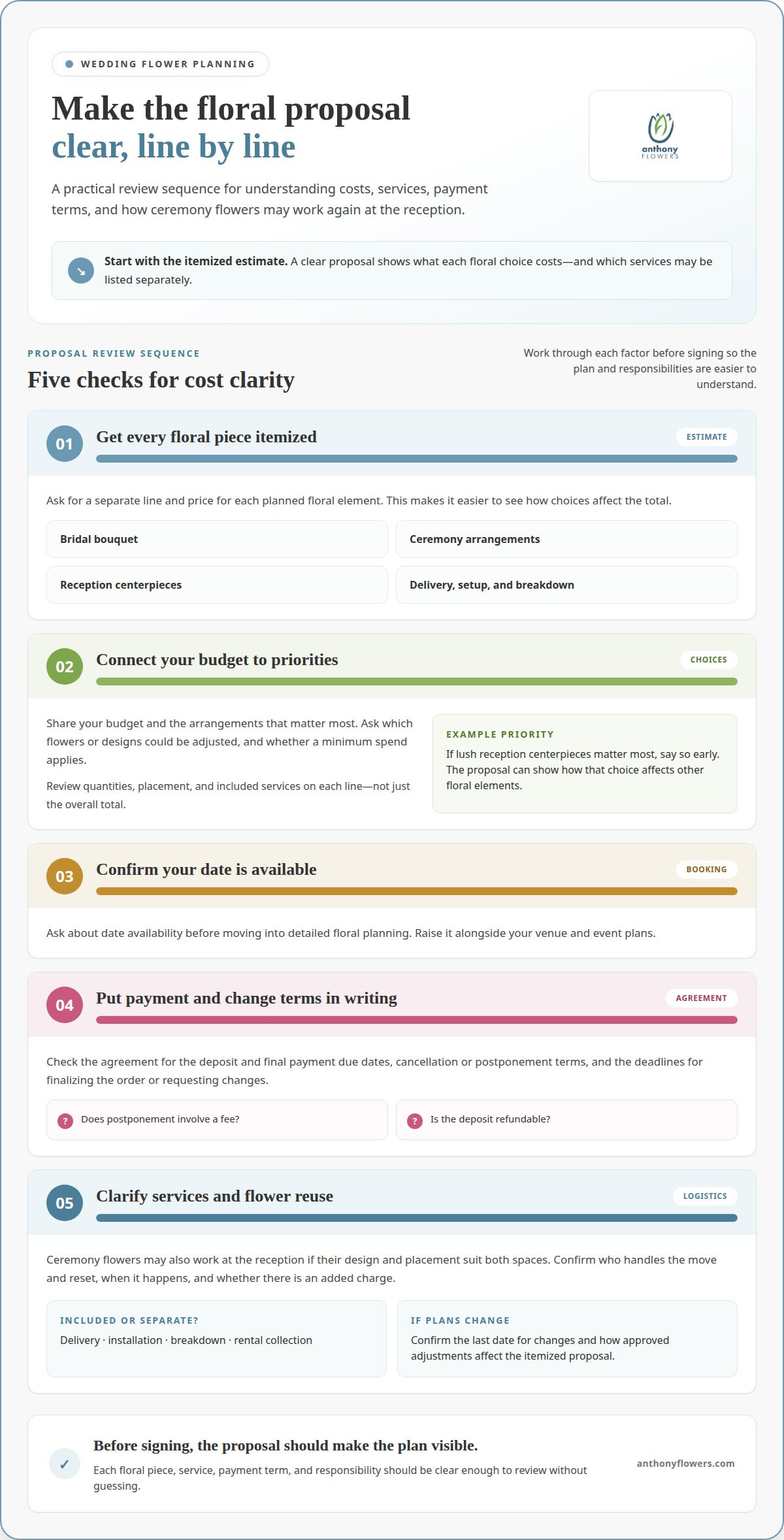
Wedding flower costs depend on the designs, flower choices, and services in the proposal. Ask for an itemized estimate that lists each element, such as a bridal bouquet, ceremony arrangements, reception centerpieces, delivery, setup, and breakdown. This shows which choices affect the total and where you might adjust the plan to fit your budget.
Share your budget and priorities before finalizing the design. Ask which flowers or arrangements could be adjusted to make the most of your budget, and whether a minimum spend applies. For example, if lush reception centerpieces matter most, say so early. The proposal can then show how that priority affects other floral elements. Review each line for quantities, placement, and included services instead of comparing totals without context.
Ask whether your wedding date is available before moving into detailed planning. Date availability is a basic booking decision, so raise it alongside your venue and event plans.
Make sure the agreement spells out the deposit and final payment due dates, cancellation or postponement terms, and deadlines for finalizing the order or requesting changes. Ask whether postponement involves a fee and whether the deposit is refundable. Get these terms in writing before signing.
Ceremony flowers may work at the reception too, if their design and placement suit both spaces. Ask who will move and reset them, when this will happen, and whether the proposal includes a transfer or setup charge.
- Proposal: Check that every planned floral piece and its pricing appears separately.
- Delivery: Ask whether delivery, installation, breakdown, and rental collection are included or charged separately.
- Changes: Confirm the last date for changes and how approved adjustments affect the itemized proposal.
These questions to ask a wedding florist before booking help connect your budget to a clear plan, from the bridal bouquet to the final reception details.
Flower substitutions and contingency plans
Ask how the florist handles a preferred bloom becoming unavailable or too costly. Flower varieties are seasonal, and specific blooms may be unavailable by the wedding date. Share the flowers, colors, and shapes that matter most, then ask about alternatives with a similar look. In-season choices can preserve the mood without requiring every bouquet or centerpiece to use the exact same variety.
A florist can work with your budget and suggest seasonal alternatives. Ask which substitutions could reduce costs while keeping your ceremony flowers, bouquets, and reception centerpieces aligned with your priorities. For example, if a particular flower matters most in the bridal bouquet, discuss using it there and choosing complementary blooms for installations.
Agree on a substitution approach before signing. Clarify which flowers are essential, which can change, and how the florist will communicate a proposed replacement. Ask what happens if an emergency affects flower delivery and how supplier changes or personal emergencies are handled. A clear plan identifies who will contact you and which decisions may need your approval.
Ask whether sample arrangements can be made before signing and whether they involve an additional fee. If you want flowers on your wedding cake, discuss the varieties and placement, and coordinate with the cake designer. Bring reference images, but describe the details that matter, such as a loose shape, soft colors, or greenery, rather than expecting an exact replica.
Finally, look at the full decor picture. Share the ceremony backdrop, reception linens, and table colors so flower choices complement the space. You can also discuss whether vessels, candles, or other decor elements belong in the overall design plan. For ideas centered on wedding bouquets and arrangements, consider how each floral detail will connect across both spaces.
Setting floral design and service expectations
Look at the florist’s design style and complete wedding galleries, not only social media close-ups. Seek examples of full ceremonies and receptions that show scale, color, and how arrangements fit the venue. Share a reference photo, then ask which details can be recreated and which should be adapted to your flowers, setting, and budget.
The U.S. Bureau of Labor Statistics notes that floral designers consider customers’ budgets and preferences for each arrangement. Use that conversation to rank your priorities: perhaps the ceremony installation and bridal bouquet matter most, while boutonnieres can stay simple. Clear priorities help create a cohesive design without making every arrangement equally elaborate.
- Ask who designs and makes the arrangements. This clarifies whether the lead designer will shape the pieces or another florist will create them.
- Discuss the number of weddings or events scheduled on your date. The answer helps you understand how the team plans its time and who will oversee your flowers.
- Share your venue and request a site walk-through if useful. Room layout, installation points, and access details can affect floral placement and setup.
- Confirm which services are included. Put design, delivery, installation, breakdown, and rental collection in writing so responsibilities are clear.
- Explain how you want guests to enjoy the arrangements. If guests may take centerpieces home, the florist can plan vessels and end-of-event handling.
For venue coordination, ask whether the florist has worked at your ceremony or reception location, who will communicate with venue staff, and whether a walk-through has a charge. Discuss liability insurance directly: ask whether coverage is carried and what documentation the venue requires. Record the answer in the agreement rather than making assumptions.
Personal touches can come from shape and texture, not only rare blooms. Describe the atmosphere you want, such as airy garden arrangements or a clean, modern look, and ask how that style can carry from the ceremony to the reception.
Communication between booking and the wedding
Clear communication turns a signed contract into a working floral plan. Before booking, agree on your main contact, the channel you’ll use, and how design decisions will be recorded. For example, keep approved changes to the bridal bouquet or ceremony flowers in writing so everyone has the same details.
Ask what updates to expect after booking and when you’ll discuss flower varieties. The florist may need time to identify suitable blooms before sharing options. Agree on a simple sequence: confirm the design direction, review flower choices, approve the final plan, and document changes. This gives you room to make considered decisions without expecting every detail immediately.
Book around 9-12 months before your wedding date; when flowers are a high priority, 7-12 months ahead is also recommended. Choose your date and venue before arranging a consultation, so the florist can discuss the spaces and your plans together.
Use the consultation to clarify how the contract describes your package, including its floral pieces and service responsibilities. Ask how to submit revisions, who approves substitutions, and how you’ll hear about a proposed flower change. If a detail is still being developed, agree on when you’ll revisit it rather than leaving it open-ended.
- Set communication milestones. Identify when you’ll review the design, flower choices, and final details.
- Record decisions in writing. Save the agreed colors, varieties, quantities, and placement in one shared record.
- Clarify the final approval process. Know who gives approval and how the florist documents accepted changes.
A beautiful floral plan depends on timely, specific conversations as much as on the blooms themselves. To begin planning your wedding flower arrangements, start with your date, venue, and design priorities.
Anthony Flowers: Wedding Flowers
Anthony Flowers offers Wedding Flowers for couples ready to bring their celebration’s floral plans together. Once you’ve considered your budget, preferred blooms, venue, and communication expectations, use those priorities to guide the next conversation. Share the details that matter most, such as the atmosphere you want for the ceremony or colors you’d like carried into the reception. A clear sense of your preferences can help focus your wedding flower decisions.
When you’re ready to discuss flowers for your celebration, contact Anthony Flowers.
Take the Next Step Toward Your Wedding Flowers
Your floral choices can shape the feel of the day, from the first moments of the ceremony through the celebration afterward. Use these questions to ask a wedding florist before booking to start a thoughtful conversation, then bring your priorities and personal touches into the design discussion.
Anthony Flowers offers Wedding Flowers for couples planning their celebration, along with Anniversary Flowers, Birthday Flowers, and Sympathy & Funeral Flowers for other meaningful occasions. If you’re ready to talk about flowers for your wedding, contact Anthony Flowers about your wedding.
Each detail you decide together can help create a setting that feels distinctly yours. Let your ideas take root and bloom into a day you’ll remember with joy.
Frequently Asked Questions
What wedding floral services and arrangements does the florist provide?
Anthony Flowers offers wedding flowers for celebrations in New York. The floral pieces should reflect your event plan, venue, and preferences. Prepare a list of what you’re considering, such as personal flowers, ceremony accents, or reception arrangements, and identify what matters most. This gives your wedding flower discussion a practical starting point without assuming every design belongs in a standard package.
How much does a wedding florist cost, including minimum spend and delivery fees?
Wedding flower costs depend on the designs, flower varieties, quantities, and services included. Ask for itemized pricing and whether a minimum spend applies to your event. Delivery fees can depend on location and distance, so clarify whether delivery is part of the wedding proposal or charged separately. For a New York venue, include the full address and delivery instructions when discussing logistics and costs.
What is included in the florist's proposal and contract?
A useful proposal lists the floral pieces, quantities, placement, and pricing, while the contract records the agreed scope and terms. Check that it distinguishes design work from delivery, installation, teardown, and rental items. It should also explain payment timing, change deadlines, cancellation or postponement terms, and how substitutions are handled. Keep the final approved version and any written updates.
How does the florist handle setup, delivery, venue access, and teardown?
Clarify who is responsible for each task and how the venue will be accessed. Share the venue’s delivery entrance, setup window, contact person, and any restrictions affecting floral placement. Ask whether delivery, installation, teardown, or rental collection are included in the agreement. For example, if a ceremony arrangement will move to the reception, name who will handle it and agree on a clear transfer plan.
Can I see photos and references from weddings similar to mine?
Review complete wedding galleries when available, rather than judging a design only by close-up images. Look for events with a venue scale, color palette, or atmosphere similar to yours. A ceremony installation in a large space may look different in an intimate room. Reference images can also help you describe what you like, such as airy bouquets, sculptural centerpieces, or restrained table flowers.
What happens if flowers are unavailable or damaged before the wedding?
Seasonal flowers may become unavailable, and specific varieties can’t be guaranteed. Agree on acceptable alternatives in advance, including which colors, shapes, or focal blooms should remain consistent. Ask how damaged flowers are handled, who will contact you, and what remedy the contract describes. Anthony Flowers accommodates custom flower or color requests when possible, so share your priorities early.


