

What if the vivid crown of a bromeliad plant isn’t its flower? That bright splash of color is often made up of leaves called bracts, while the true flowers are smaller and shorter-lived. It’s an eye-catching feature, but it can leave new plant owners wondering what they’re looking at, how much light and water their plant needs, and whether it’s in trouble when the color fades.
Bromeliads are easier to enjoy when you understand their growth habit and life cycle. A fading bloom doesn’t necessarily mean the plant is dying. Many bromeliads produce small offshoots, called pups, that can grow into new plants.
This guide will help you choose a bromeliad suited to your home’s available light and give it practical care. You’ll learn how growth habits affect watering, what to expect during flowering, and how to recognize the transition from bloom to pup development. With the basics in hand, you can enjoy your bromeliad’s striking color and know what to watch for next.
Key Takeaways
- Bromeliads belong to the same plant family as pineapple, and many form a leafy rosette that holds water in a central cup.
- Understanding whether a bromeliad plant grows in soil or naturally attaches to other plants can help you make sense of its care needs.
- Compare Guzmania, Neoregelia, and Vriesea by their distinctive shapes and colors to find a display that suits your space.
- Follow the plant’s changing needs through flowering and later growth, and watch for pups as they develop.
- Before choosing a bromeliad as a gift, consider the recipient’s indoor light, available space, and comfort with plant care.
What Is a Bromeliad Plant, and What Makes It Different?
Bromeliads are members of the Bromeliaceae family, a diverse group best known through one familiar relative: the pineapple. The family includes more than 3,500 described species across about 56 genera, with forms that range from familiar potted houseplants to air plants. The Bromeliaceae family includes plants with varied structures and adaptations, so “bromeliad” describes a broad family rather than one uniform look.
Bromeliaceae is the plant family; Guzmania is one genus within that family. This distinction helps explain why two bromeliads can look quite different while sharing the same botanical family. Some popular houseplants have smooth, arching leaves and a vivid upright display, while others grow in flatter, more open forms with patterned foliage.
A common shape is the rosette: leaves spread from a central point in overlapping layers, creating a graceful, star-like silhouette. In many varieties, those leaves also form a central cup. Not every bromeliad uses that cup in the same way. A plant’s form reflects its growth habit, offering useful clues about the care it may need.
Why Do Bromeliads Have Such Distinctive Rosettes?
Look at how the leaves meet near the center. In a typical rosette, each new leaf emerges close to the others, building a layered shape that can hold water in some varieties. This tidy arrangement makes the plant feel sculptural, even before its colorful display appears.
Growth forms vary across the family. Some bromeliads have broad, cupped centers; others have narrow or spreading leaves, or grow attached to other plants in nature. Treat the rosette as a visual clue, not a rule that predicts every detail of a plant’s growth or water needs.
Is the Bright Display a Flower or Colorful Foliage?
Sometimes it’s foliage. Neoregelia, for example, is known for colorful leaves, while other bromeliads produce bright flower bracts, the modified leaves that cluster around the actual flowers. The true flowers may be small in comparison, emerging from the center or among the bracts. Knowing what you’re seeing makes it easier to appreciate the plant’s changing display.
Colored leaves or bracts can remain striking after individual flowers have faded, so the plant’s appeal isn’t limited to a brief flowering moment. Eventually, the display changes as the plant moves through its natural growth cycle. That shift is expected, not automatically a sign that something is wrong, and it leads into what to watch for as the plant develops.
How Bromeliads Grow: Light, Water, and Their Tropical Adaptations
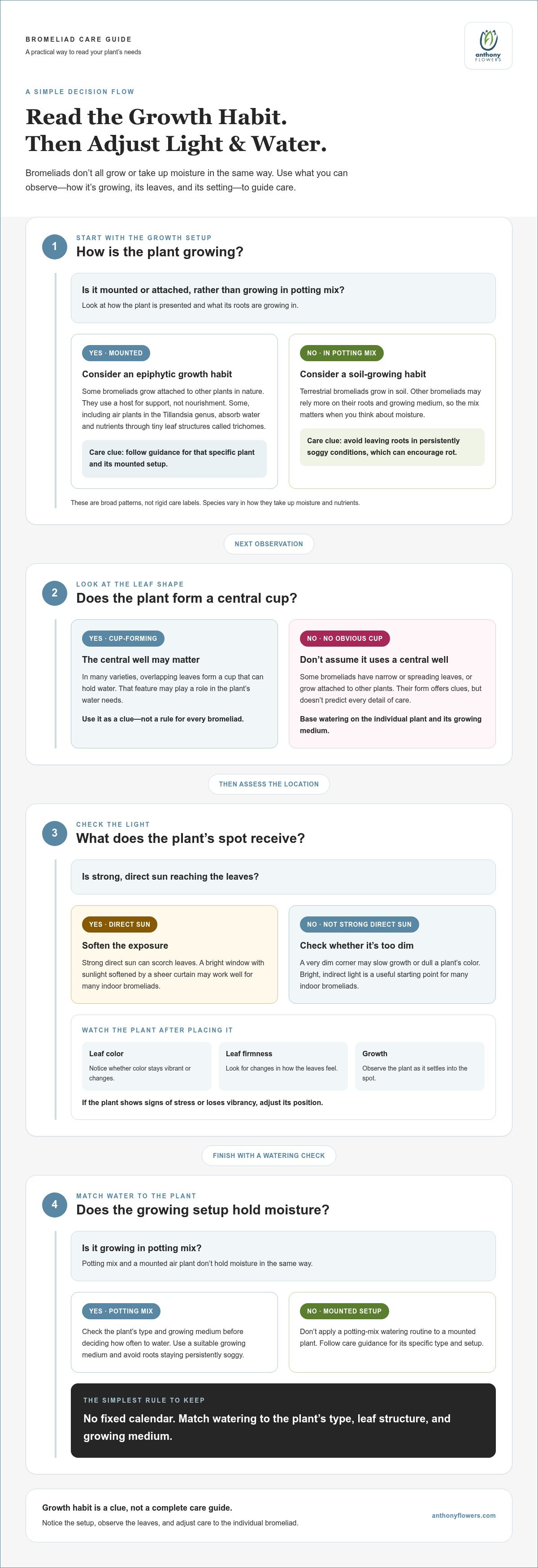
A bromeliad’s natural growth habit offers useful clues, but it isn’t a complete care guide by itself. Some species grow in soil, while epiphytes grow attached to trees or other plants in nature. They aren’t parasites: the plant uses its host for support rather than taking nourishment from it. Some epiphytic bromeliads, such as air plants in the Tillandsia genus, absorb water and nutrients through tiny leaf structures called trichomes. Other bromeliads rely more on their roots and growing medium.
Care depends on the species’ growth type, leaf structure, and growing medium, so light and watering should suit the individual plant rather than follow one rule for the entire family. The Clemson University Bromeliad Factsheet offers more detail on how bromeliad types differ in their growing needs.
What Does a Bromeliad’s Natural Growth Habit Tell You?
Terrestrial bromeliads grow in soil, while epiphytic types may attach to branches in their native habitats. These are broad patterns, not rigid care labels: species vary in how they take up moisture and nutrients. For an indoor plant, notice whether it’s growing in potting mix or mounted, then follow care guidance suited to that specific type.
How Should You Think About Indoor Light and Water?
Bright, indirect light is a useful starting point for many indoor bromeliads. A spot near a bright window where sunlight is softened by a sheer curtain may work well. Strong direct sun can scorch leaves, while a very dim corner may slow growth or dull a plant’s color. Observe the foliage after placing the plant, and adjust its position if it shows signs of stress or loses vibrancy.
Watering deserves the same thoughtful approach. Check the plant’s type and growing medium before deciding how often to water; potting mix and a mounted air plant don’t hold moisture in the same way. For cup-forming varieties, the central well may play a role in their water needs, but don’t assume every bromeliad relies on it. Use a suitable growing medium and avoid leaving roots in persistently soggy conditions, which can encourage rot.
- Check the setting: Notice how much direct sun reaches the spot during the day, not just how bright it looks at a glance.
- Check the plant: Look for changes in leaf color, firmness, or growth as you settle on a location.
- Check the growing habit: Match watering to the plant’s type and medium instead of following a fixed calendar.
Small adjustments can make care feel straightforward. If you’re choosing a plant gift in New York, explore Anthony Flowers’ plant offerings for a fresh, living accent suited to a home or workspace.
Which Bromeliad Variety Fits Your Space and Expectations?
Choosing a bromeliad is easier when you start with the display you want. Some varieties draw the eye to a bold central spray, while others make their leaves the main attraction. Guzmania, Neoregelia, and Vriesea are useful examples for comparing these looks. Their different forms can help you narrow down the kind of bromeliad that would suit your room and preferences.
How Do Guzmania, Neoregelia, and Vriesea Differ?
Guzmania often has smooth, arching leaves beneath a bright upright cluster of bracts. Neoregelia is recognized for colorful foliage, with the inner leaves often showing especially vivid color. Vriesea typically has a striking, flattened flower spike that rises above its leafy rosette. These visual cues can help you decide whether you prefer a central accent or color spread across the leaves.
| Example | Typical form and display | General care consideration |
|---|---|---|
| Guzmania | Arching leaves with a colorful central bract display | Look for bright, indirect light and follow care guidance for its specific type |
| Neoregelia | Compact rosette, often with colorful leaves | Light can affect foliage color; avoid assuming every variety has identical needs |
| Vriesea | Leafy rosette topped by a distinctive flattened flower spike | Check the plant’s light and watering needs for its growing habit |
These descriptions are general guides, not guarantees of a particular color or shape. Individual plants can vary, and care needs differ by variety, growing medium, and home conditions. Use the plant’s label or variety-specific instructions alongside what you observe.
What Should You Consider Before Bringing One Home?
Start with the spot where the plant will live. Notice whether it receives bright, indirect light, strong direct sun, or stays dim for much of the day. Then measure the available surface and look above it, too: a tall flower spike needs different visual breathing room than a low rosette of colorful foliage. Choose a form that feels at home in the space.
- For a central display: Consider whether you’re drawn to upright bracts or a sculptural flower spike.
- For leafy color: Look for foliage that offers interest across the whole rosette.
- For simpler care planning: Find out the variety and whether it grows in potting medium or another setup, then match your watering routine to it.
A bromeliad plant can be a vivid focal point, but the best choice is one that suits both your room and the attention you’re happy to give it. Compare the display you love with the light available, then let the variety’s specific care needs guide your decision.
How to Care for a Bromeliad Through Flowering and Pup Growth
A bromeliad’s bright central display is part of a larger life cycle. After flowering, the original rosette may slowly decline while young offshoots begin to grow. A fading display doesn’t automatically mean the plant was neglected or that it’s time to discard it. Observe the whole plant, including its leaves and base, to see what comes next.
Use this simple care sequence as the plant changes:
- Place it thoughtfully. Keep the plant in a spot suited to its variety and indoor light.
- Observe its condition. Look at the leaves, central display, and base for gradual changes.
- Water for its type. Follow guidance for its growing medium and growth habit rather than sticking to a fixed schedule.
- Monitor new growth. Check around the base for pups, and give them time to develop before considering propagation.
What Should You Do When the Main Display Starts to Fade?
As flowering ends, the colorful bracts or flowers may lose their freshness, and the parent rosette can gradually decline. Continue suitable care while you watch for changes in the leaves and new growth near the base. The same rosette shouldn’t be expected to flower again; its fading display is a natural transition, not proof that care went wrong. Avoid removing the whole plant in a hurry.
Notice whether the change is limited to the display or includes other signs of stress. If the plant’s condition shifts quickly, review its light, watering, and growing medium. That check can help distinguish the natural end of flowering from problems that may need a care adjustment.
What Are Bromeliad Pups, and What Happens Next?
Pups are young offshoots that can develop around the base of the parent plant. As the flowering parent gradually declines, its pups may continue growing and become the next generation of bromeliads. Look for small shoots beside the main rosette, then give them time to establish. Their development varies, so wait until an offshoot is growing well before considering separation or propagation.
Patience matters here. A newly noticed pup may still depend on the parent, and separating it too early can interrupt its development. There’s no single timing rule that fits every variety or plant. Keep observing the pup’s growth and use guidance suited to its type before making a change. You can enjoy the evolving plant as it is, even if you don’t plan to propagate it.
The changing display is part of what makes a bromeliad plant rewarding to follow. Its color, mature rosette, and emerging pups each bring a different kind of interest to the home. If you’re choosing a living gift in New York, explore Anthony Flowers’ plant selection for a thoughtful green accent.
Choosing a Bromeliad Plant as a Gift in New York
A bromeliad can make a memorable gift for someone who enjoys vivid color and distinctive shapes at home. Its striking foliage or central display brings a tropical accent to a room, and the plant’s changing growth can be rewarding to watch. The best choice, though, starts with the recipient’s space and interest in caring for a living plant, not appearance alone.
Is a Bromeliad a Thoughtful Houseplant Gift?
Think about where the plant might live. Does the recipient have a bright spot with indirect light, or is their home mostly shaded? Is there room for a tabletop accent, and would they enjoy a bold central display or colorful leaves? These details help you choose a plant that feels considered rather than simply decorative.
It’s also kind to consider how much plant care the recipient enjoys. Someone who likes observing new growth may appreciate a plant whose appearance changes over time. Someone with little room or limited interest in care may prefer a different kind of gift. A bromeliad’s display can fade as it moves through its natural life cycle, so present it as a living plant to enjoy, not as a promise of a particular bloom schedule or lifespan.
How Can You Make a Local Plant Gift Feel Personal?
A short card can make the gesture feel warm and specific. Mention the occasion, share a quality you appreciate in the recipient, or add a simple line that connects the plant’s bright presence to your wishes for them. A few sincere words often feel more personal than a long, general message.
For local delivery, enter the recipient’s complete address and include helpful details that can make the destination easier to identify, such as an apartment or suite number, building name, or relevant access note. If the gift is going to a workplace or hospital, include the department or recipient details needed to direct it appropriately. Clear information supports a smoother handoff and helps your thoughtful gesture reach the right person.
Anthony Flowers is a family-owned New York florist offering plants and local delivery to homes, hospitals, businesses, and event venues. Same-day delivery in New York is available for orders placed before 2:00 PM. Delivery hours are Monday through Saturday, 9 AM to 7 PM, and Sunday, 10 AM to 6 PM. Delivery fees vary by location and distance, with the exact cost shown at checkout. You can explore plant and gift delivery in New York and add a personal message at checkout. Choose with the recipient’s light, space, and care preferences in mind, then make the gesture their own.
Make Room for a Little Tropical Color
Your next step can be simple: choose a spot where a new plant will feel at home, then pick a variety that suits the light and the person who’ll care for it. A bromeliad plant can bring a vivid, sculptural touch to a room, with new growth offering a reason to keep watching as it changes.
If you’re choosing a living gift, think beyond the first burst of color. A thoughtful match for someone’s home and habits can make the gesture feel personal long after the moment of giving. Add a few words that speak to your relationship, and let the plant become part of their everyday space.
For a fresh plant or another meaningful gift, explore plant and gift delivery in New York. With a little care and a place that suits it, your choice can bring lasting brightness to someone’s home.
Frequently Asked Questions
What is a bromeliad plant?
A bromeliad plant is a member of the Bromeliaceae family, which also includes pineapple. The family contains many different kinds of plants, so the name doesn’t refer to one specific shape or care routine. If you’re identifying a houseplant, look for its growth form and any label identifying its genus or variety. Those details help you find care guidance that fits the individual plant.
How often should you water a bromeliad?
There isn’t one watering interval that suits every bromeliad. Check the plant’s growing medium and variety, then feel the medium before watering rather than following a calendar alone. A pot in a warm, bright room may dry differently from one in a cooler, dimmer spot. If the medium stays wet, hold off and check drainage. For a cup-forming type, follow its specific guidance for keeping the center fresh.
Does a bromeliad need direct sunlight?
Usually, bright indirect light is a safer starting point than strong, direct sun. A few feet from a bright window or behind a sheer curtain can soften intense rays. Watch the leaves after placing the plant: scorched or faded patches may suggest too much sun, while weak growth in a dark corner can signal too little. Adjust the location gradually and observe how the plant responds.
What happens to a bromeliad after it flowers?
After flowering, the original rosette may slowly decline, while new growth can emerge around its base. The fading display doesn’t automatically mean the plant is unhealthy or that you should discard it. Keep caring for the plant and watch for pups. If the flower stalk has dried and no longer adds to the display, you can trim it carefully without cutting into healthy leaves or nearby shoots.
Can you grow a new bromeliad from a pup?
Yes, a pup can grow into a new bromeliad, but give it time to develop before separating it from the parent. A tiny offshoot may not be ready to grow on its own. Watch for steady growth and a more established shape, then use propagation guidance suited to that variety. If you’re unsure, leaving the pup attached while it develops is a sensible, patient choice.
Are bromeliads easy to care for indoors?
Many indoor bromeliads can be manageable houseplants once their light and watering needs are understood. The key is to avoid treating every variety alike: growing medium, leaf structure, and room conditions can affect care. Choose a suitable location, observe the plant, and adjust your routine based on what you see. That attentive approach is more useful than relying on a rigid schedule or assuming the plant needs constant attention.
Is a bromeliad a good gift for someone in New York?
A bromeliad can be a thoughtful New York gift for someone who enjoys distinctive plants and has a suitable spot at home or work. Consider the recipient’s available light, display space, and interest in plant care before choosing. Anthony Flowers offers plants and gifts with local delivery in New York. Explore the plant selection for a living gift, while choosing a plant that fits the recipient’s setting.


