

The snake plant is the ultimate New Yorker; it thrives on grit, adapts to cramped quarters, and maintains a sharp, architectural elegance through every season. While other greenery might wilt at the first sign of a dim studio or a dry winter radiator, this resilient beauty stands tall. Mastering snake plant care is the secret to bringing life into even the most challenging NYC living spaces. It is a plant that understands the hustle and rewards your busy schedule with effortless, air-purifying growth.
You likely chose this plant because you want a home that feels like a lush sanctuary, yet the fear of a brown leaf or a dark corner keeps you hesitant. We understand that NYC apartment living presents unique hurdles, from limited natural light to the parching heat of old-school radiators. This guide promises to transform you into a confident plant parent by addressing these specific urban challenges. You will discover the best watering rhythms for small spaces, how to navigate low-light windows, and simple tips to ensure your snake plant doesn't just survive, but truly flourishes as a living sculpture in your modern home.
Key Takeaways
- Learn why the architectural snake plant is the perfect resilient companion for low-light New York studios and busy urban lifestyles.
- Master the "less is more" approach to snake plant care to prevent root rot and ensure your greenery thrives in small living spaces.
- Discover how to shield your plants from harsh NYC microclimates, including dry winter radiator heat and chilly summer air conditioning drafts.
- Understand why these low-pollen, hardy plants are a thoughtful, long-lasting alternative for hospital deliveries and housewarming gifts.
- Identify the clear signs of a root-bound plant and learn the simple techniques to propagate new growth for your home or community.
Why the Snake Plant is the Perfect Match for New York Life
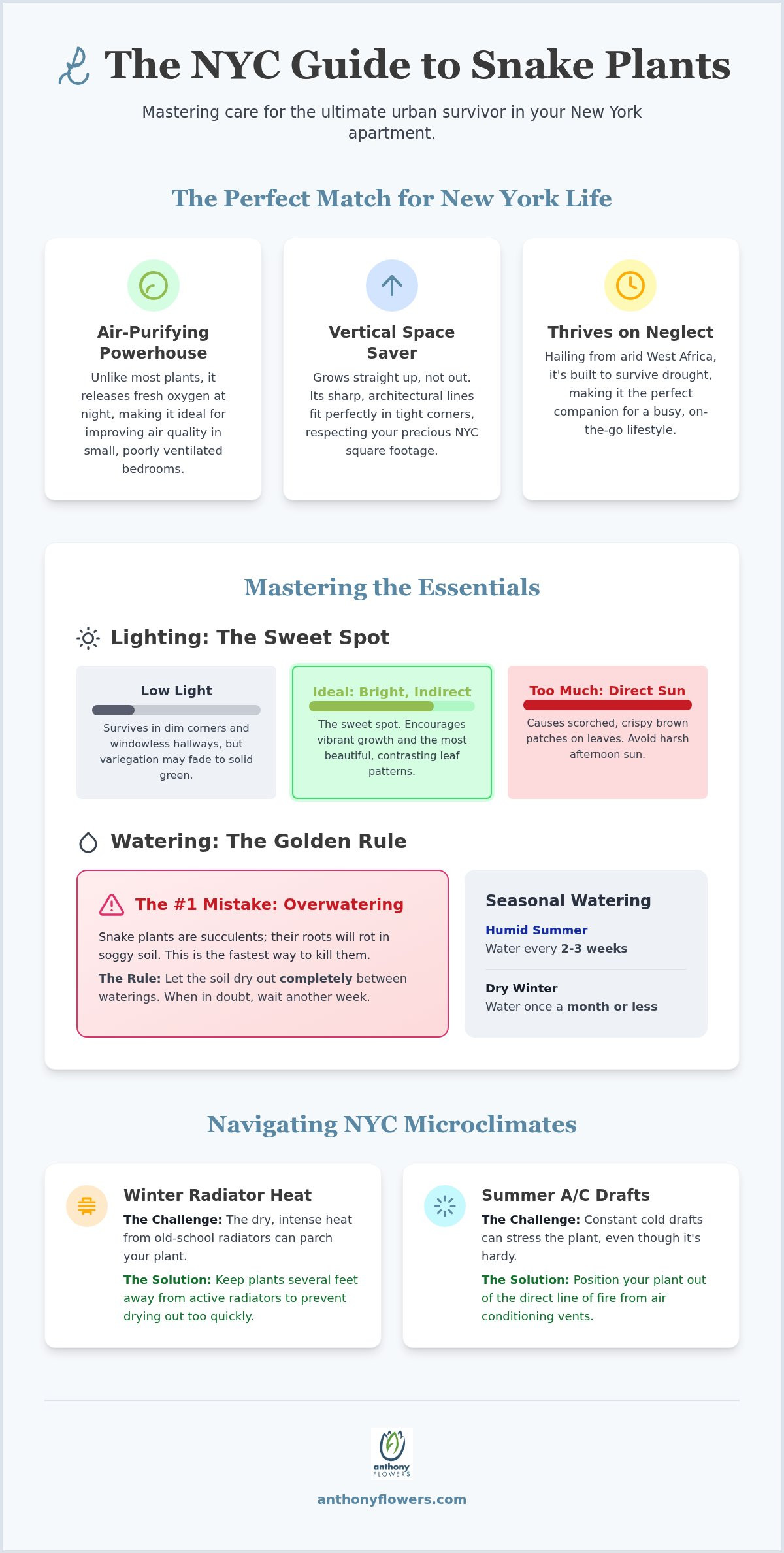
Living in New York City requires a certain level of endurance, and the snake plant is one of the few houseplants that truly shares that local grit. Formally known as Dracaena trifasciata, this striking succulent is defined by its stiff, sword-like leaves that shoot directly upward from the soil. Unlike delicate ferns that demand constant misting and precise humidity, the snake plant thrives on a bit of healthy neglect. It's the ideal companion for the professional who spends long hours at the office or the socialite whose weekends are spent exploring the city's newest galleries.
The true magic of this plant lies in its resilience. It's built to withstand the common pitfalls of urban living, from the low light of ground-floor walk-ups to the dusty air of a Midtown high-rise. Beyond its tough exterior, it offers a rare functional benefit: air purification. While most plants release carbon dioxide at night, the snake plant continues to pump out fresh oxygen while you sleep. This makes it a breath of fresh air for small Manhattan bedrooms where ventilation might be less than perfect.
From a design perspective, these plants are incredibly versatile. They look just as sophisticated in a minimalist Brooklyn loft as they do tucked into the corner of a classic, pre-war Upper West Side apartment. Their presence adds an immediate sense of curated elegance without requiring a professional landscaper's touch.
The Architectural Beauty of Sansevieria
Space is the ultimate luxury in New York. The snake plant respects your square footage by growing vertically rather than spreading out. Its clean, sharp lines provide a modern silhouette that fits perfectly into narrow corners or atop slim bookshelves. You'll notice beautiful "tiger stripe" patterns across the leaves, often framed by creamy yellow or silver variegated edges. These textures create a living work of art that stays vibrant all year long.
A History of Hardiness
Originally hailing from the arid regions of West Africa, this plant evolved to survive prolonged droughts and erratic weather. Its semi-succulent leaves act as water reservoirs, making it a very forgiving roommate if you happen to forget a watering session. This evolutionary history is why snake plant care is so famously straightforward. Sansevieria is the gold standard for low-maintenance greenery because it simply refuses to give up on you.
Mastering the Essentials: Light, Water, and Soil for Your Sansevieria
Successful snake plant care starts with mirroring the plant's native arid environment within your own four walls. While these plants are famously resilient, they thrive when you provide the right balance of drainage and patience. Unlike many tropical houseguests, the snake plant prefers to be left alone rather than fussed over. It's a relationship built on trust and a hands-off approach that fits the pace of a busy city life.
Lighting: From Dark Corners to Sunny Sills
In a city where light is often a luxury, the snake plant is a true ally. It handles "New York Light" better than almost any other species. This includes everything from the bright, indirect glow of a south-facing window to the dim corners of a ground-floor studio. If you're looking for a research-backed low-maintenance houseplant care guide, you'll find that these plants are the rare exception that can survive in windowless hallways or home offices.
However, you should still watch for signs of distress. Bright indirect light is the sweet spot where you'll see the most growth and vibrant variegation. If the leaves develop scorched, crispy brown patches, they're likely getting too much direct afternoon sun. Conversely, if a variegated plant starts to turn solid green, it's telling you it needs a bit more light to maintain its beautiful, contrasting patterns.
The Golden Rule of Watering
The most common mistake is loving your plant to death with too much water. The golden rule of snake plant care is simple: let the soil dry out completely between waterings. Use the "finger test" by sticking your finger two inches into the soil. If it feels even slightly damp, wait another week. You can also use a moisture meter for a more precise reading, which is helpful in deep pots where the bottom stays wet longer than the surface.
Seasonal adjustments are vital for NYC dwellers. During our humid summers, your plant might need a drink every two to three weeks. In the winter, when growth slows down and the air stays stagnant, you can often go a full month or more without watering. Overwatering leads to root rot, which shows up as yellowing, mushy leaves at the very base of the plant. If you catch this early, you can often save the plant by letting it dry out completely.
Soil and Temperature Preferences
Drainage is the most critical factor for success. Always use a well-draining potting mix, such as a cactus or succulent blend, and ensure your pot has a drainage hole. This prevents water from sitting at the bottom and suffocating the roots. Temperature-wise, these plants are quite comfortable in standard NYC home environments, preferring a range between 65°F and 85°F. If you're looking to add a touch of green to your space, exploring our collection of modern plants is a great way to find a hardy companion that fits your aesthetic perfectly.
Navigating NYC Microclimates: Radiators, AC, and Dark Corners
New York City apartments pose a specific set of environmental challenges that standard gardening blogs often overlook. From the intense dry heat of pre-war steam radiators to the icy drafts of window AC units, your home is a collection of microclimates. Effective snake plant care in the city means understanding these shifts and positioning your plant for success. Unlike delicate tropicals that require constant misting, the snake plant is a rare urban ally that actually prefers the lower humidity levels found in most Manhattan high-rises.
While these plants are tough, they aren't invincible. The layer of fine city dust that settles on everything can eventually clog the pores of those architectural leaves. In a dim apartment, every bit of light counts. Wiping the leaves with a damp cloth every few weeks isn't just about aesthetics; it ensures the plant can photosynthesize efficiently even when the sun is hiding behind a neighboring skyscraper. For a deeper look at the science behind these needs, the Penn State Extension guide to snake plant care provides excellent research-based insights for home growers.
Surviving the Winter Heating Season
When the city turns on the steam, the air in your apartment can become as dry as a desert. This "radiator dilemma" is the primary cause of brown, crispy leaf tips. To protect your greenery, keep your pots at least three feet away from any active heating element. This resilience to parched environments is exactly why we recommend these plants for hospital flower delivery NYC. Hospital rooms are notorious for their dry, recycled air, and a hardy snake plant offers a long-lasting, low-maintenance alternative to traditional bouquets for patients in recovery.
Maximizing Low Light in Small Spaces
If your windows face a brick wall or a narrow airshaft, you have to get creative with your snake plant care routine. You can maximize the reach of available light by placing a mirror opposite your window to bounce sunshine into the darker corners of your room. Because these plants grow vertically rather than spreading out, they are the perfect candidates for narrow entryways or crowded bookshelves. Styling them on high shelving or vertical displays allows you to enjoy a lush, modern aesthetic without sacrificing a single inch of your precious floor space.
The Gift of Greenery: Why Snake Plants are Top Choices for NYC Deliveries
Choosing the right gift for a New Yorker often involves balancing beauty with practicality. While a bouquet of roses is stunning, a snake plant offers a lasting legacy of greenery that requires very little effort from the recipient. This makes it an exceptional choice for Get Well gifts, especially for those recovering in hospital rooms where daily snake plant care is easily managed. Their low-scent and low-pollen nature makes them the perfect NY Presbyterian flower shop alternative, ensuring they are welcome in sensitive environments without causing irritation.
For those moving into a new studio or high-rise, these plants serve as housewarming heroes. They represent a resilient welcome to the city, standing tall as living sculptures. When paired with elegant ceramic containers, they achieve a sophisticated modern floral arrangements NYC look that complements any interior design style. Whether it's a minimalist loft or a cozy brownstone, the architectural leaves add an immediate sense of home and permanence.
Delivering to NYC Landmarks
Sending greenery to busy locations like Columbia University dorms or faculty offices requires a local touch. Our team at Anthony Flowers has spent over 60 years navigating these specific delivery routes, ensuring your gift arrives safely and professionally. In crowded hospital wards, snake plants are particularly staff-friendly because they don't require water changes or drop petals, keeping the space clean and serene. If you're looking to send a thoughtful gesture today, you can browse our full selection of plants for local delivery.
The Meaning Behind the Gift
Beyond their physical beauty, these plants carry deep symbolism. In many cultures, they represent persistence, long life, and protection, making them a meaningful choice for birthdays or thank-you gestures. You can easily elevate the experience by pairing these architectural plants with one of our curated gift baskets for a comprehensive wellness package. A snake plant is a superior long-term gift because it continues to grow and purify the air for years, whereas a standard bouquet is a fleeting, though beautiful, moment in time. Proper snake plant care ensures this living gift remains a vibrant part of their home for a decade or more.
Beyond the Basics: Repotting, Propagation, and Troubleshooting
Even the most resilient plants eventually outgrow their surroundings. While your routine for snake plant care usually involves minimal effort, there are moments when your green companion needs a bit of specialized attention. If you see roots peeking through drainage holes or notice the nursery pot starting to bulge, it's time for a refresh. These signs indicate your plant is root-bound and ready for a slightly larger home to continue its vertical growth.
Pests are rare for these sturdy succulents, but they can occasionally hitch a ride into your apartment. Keep an eye out for tiny, white cottony spots known as mealybugs or fine webbing from spider mites. A quick wipe with a damp cloth and a bit of neem oil usually solves the problem. If you notice the leaves starting to droop or fall over, it's an emergency signal. This is often caused by a combination of overwatering and low light, which weakens the base of the architectural leaves.
How to Repot Your Snake Plant
Spring is the ideal season for a move, as the plant is entering its active growth phase. When choosing a new container, prioritize stability. Since snake plants are naturally top-heavy, terra cotta or heavy ceramic pots are the best choice. These materials provide the weight needed to prevent tipping and offer the breathability your plant's roots crave. Gently lift the plant from its old home, shake away the tired soil, and settle it into fresh, well-draining succulent mix. Ensure you don't bury the leaves too deep, as this can trap moisture and lead to rot.
Propagating Your NYC Jungle
Sharing the gift of greenery with neighbors is a wonderful way to build community in your building. You can easily grow new "pups" through the division method during your spring repotting. Simply use a clean knife to separate the small offshoots from the main root mass. If you prefer a more visual process, try water propagation. Place a leaf cutting in a jar of filtered water and wait for roots to emerge. You'll need plenty of "New York patience" for this method; it often takes two to three months before your new plant is ready for soil. It's a slow but rewarding process that turns a single leaf into a lasting legacy of snake plant care for your friends and family.
Bring Your Urban Sanctuary to Life
Bringing a touch of nature into your New York home shouldn't be a source of stress. By mastering snake plant care, you've discovered that greenery can thrive even in the face of parching radiator heat and dim studio light. These architectural beauties don't just survive; they actively purify your air and elevate your home aesthetic with minimal effort. Whether you're starting your own indoor jungle or sending a resilient gift to a friend at NY Presbyterian, the snake plant is a steadfast urban companion that stands the test of time.
At Anthony Flowers, we've been hand-delivering greenery across the city since 1960. Our selection is expertly curated for urban apartment conditions, ensuring your new plant arrives ready to flourish in its new environment. We also offer same-day delivery for local hospital orders when you want to send a lasting "get well" wish that stays vibrant long after a traditional bouquet might fade.
Browse our collection of lush, resilient plants for NYC delivery to find your perfect match today. You now have all the tools and confidence needed to be a successful plant parent. Your apartment is ready to become the vibrant, fresh sanctuary you deserve.
Frequently Asked Questions
Are snake plants toxic to cats and dogs?
Yes, snake plants are toxic to pets if ingested. They contain saponins that cause nausea, vomiting, and diarrhea in cats and dogs. In the intimate quarters of a Manhattan studio, it's best to place your plant on a high shelf or a stable pedestal where curious paws can't reach. While the toxicity is generally mild, keeping these architectural leaves out of reach ensures a safe, beautiful home for your entire family.
How often should I water my snake plant in a New York winter?
During a New York winter, you should reduce your watering to once every four to six weeks. Even though steam radiators create a parched environment, the plant enters a dormant state and requires very little moisture. Overwatering during these colder months is the most common mistake in snake plant care. Always check that the soil is dry to the touch all the way through before adding a small amount of water.
Can a snake plant survive in a room with no windows?
While they are incredibly tolerant of low light, snake plants cannot survive forever in a room with no windows. They still need some light to perform photosynthesis and maintain their structural integrity. If you have a windowless bathroom or hallway, we recommend rotating two plants. Keep one in a brighter spot for two weeks, then swap them. This rotation ensures each plant gets the energy it needs to stay vibrant.
Why are the leaves of my snake plant falling over?
Leaves falling over is usually a sign of root rot from overwatering or a severe lack of light. In many NYC apartments, the combination of a dark corner and a heavy hand with the watering can leads to mushy bases. If the leaves feel soft, the roots are likely struggling. To fix this, stop watering immediately and move the plant closer to a window. This adjustment is a vital part of long-term snake plant care.
How fast do snake plants grow indoors?
Snake plants are notorious for their slow, steady growth pace. In a typical indoor environment, you might only see two to four new leaves emerge each year. This slow growth is actually a benefit for city dwellers, as it means the plant won't quickly outgrow its designated corner or bookshelf. Patience is key. As long as the leaves remain firm and the color is vibrant, your plant is doing just fine in your home.
Do snake plants really clean the air?
Yes, snake plants are famous for their ability to filter indoor toxins like formaldehyde and benzene from the air. They are unique because they continue to release oxygen at night, which is a rare trait among houseplants. In a city where air quality can be a concern, having a few of these architectural plants in your bedroom can create a fresher, more restful environment. They act as a silent, beautiful air filtration system.
What is the best fertilizer for a snake plant in an apartment?
The best fertilizer for a snake plant is a balanced, water-soluble houseplant food or a specific cactus and succulent fertilizer. We recommend a 10-10-10 ratio diluted to half strength. Since these plants aren't heavy feeders, you only need to fertilize them twice a year. Apply the food once in the spring and once in the summer to support their active growth months. Avoid any fertilization during the dormant winter season.
Can I put my snake plant outside on my NYC fire escape in the summer?
No, you should never place your plant on a NYC fire escape. It's illegal under city regulations to block these emergency exits with any items, including planters. Additionally, the intense, direct sunlight and heat reflecting off the metal can quickly scorch the plant's leaves. For the best results, keep your greenery inside where the temperature is more stable and the light is filtered through your apartment windows.


