

Your snake plant doesn't want your constant attention. It actually thrives on your busiest, most forgetful days. While many New Yorkers seek out snake plant care tips to save a yellowing leaf, the secret often lies in strategic neglect. It's frustrating to watch a resilient plant struggle in a dim apartment when you're just trying to bring a bit of lush, green life into your home.
This guide will transform you into a confident indoor gardener by mastering the art of urban survival for these architectural wonders. We'll show you how to navigate the specific challenges of city living, from avoiding illegal fire escape placements to choosing the right variety like the silvery 'Moonshine' or the classic 'Laurentii'. You will learn the exact signs of overwatering, how to handle the recent botanical shift to the Dracaena genus, and the best ways to keep your pets safe. From propagation secrets to light requirements for the darkest studios, this is your roadmap to a thriving, air-purifying sanctuary.
Key Takeaways
- Understand the botanical shift from Sansevieria to Dracaena and how its hardy West African origins benefit your home.
- Master snake plant care with our "Golden Rule" of watering to ensure your plant thrives in low-light NYC corners.
- Protect your greenery from the drying effects of "radiator season" in pre-war buildings with our expert survival tips.
- Learn to diagnose common pests and prune damaged tips with professional precision to keep your collection looking fresh.
- Discover how to style these architectural plants as sophisticated, modern gifts for neighbors at Columbia or patients at NY Presbyterian.
What is a Snake Plant? Understanding the Sansevieria Basics
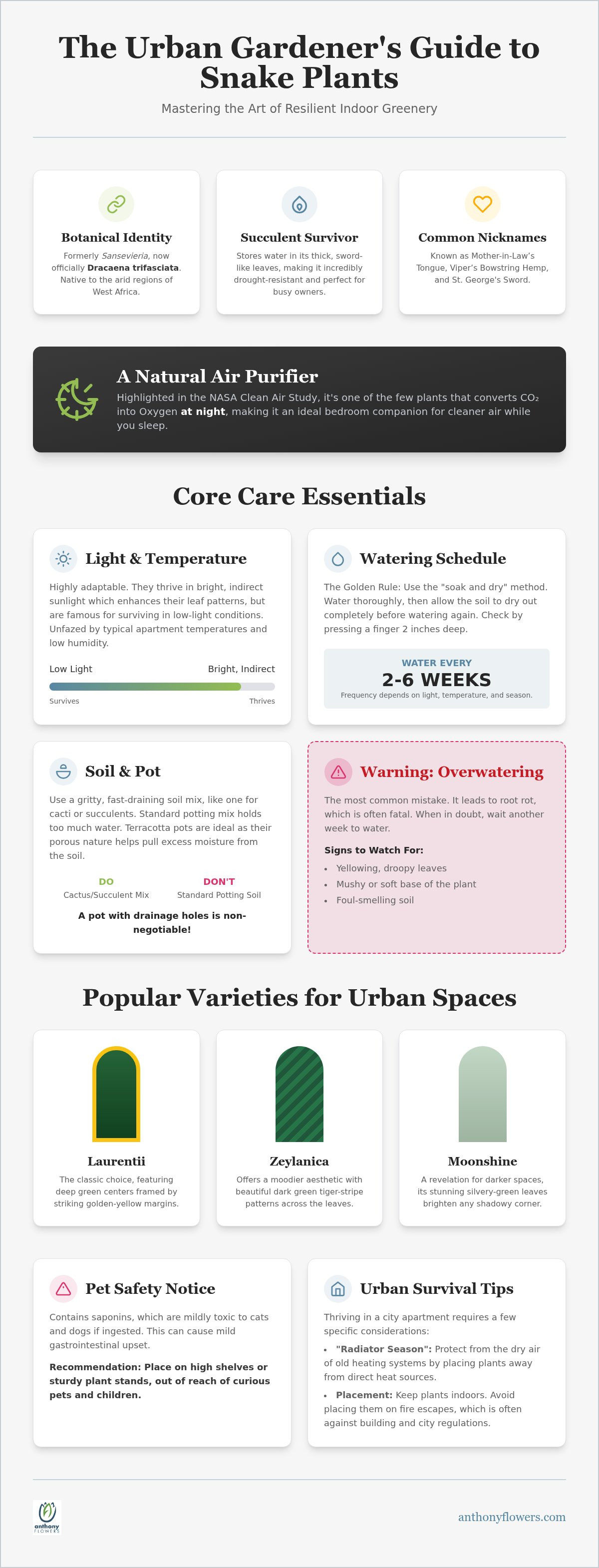
The plant we've called Sansevieria for generations has a new identity. Botanists recently moved it into the Dracaena genus, and its scientific name is now Dracaena trifasciata. This hardy species originated in the arid climates of West Africa. It adapted to survive harsh conditions by storing moisture in its upright, sword-like leaves. This succulent nature is exactly why it thrives so well in New York apartments. It waits patiently for your attention.
Think of it as a tactical survivor. Unlike many leafy houseplants, it's a succulent that stores water within its thick, waxy foliage. This adaptation makes it incredibly drought resistant. It's perfect for busy New Yorkers who might forget a watering day. Proper snake plant care starts with respecting this desert-like resilience. This makes snake plant care remarkably simple for those with demanding schedules. It doesn't demand humidity or frequent misting. Instead, it asks for a steady hand and a bit of space to breathe.
You'll find it under several evocative nicknames. Some call it Mother-in-Law’s Tongue due to its sharp, pointed tips. Others know it as Viper’s Bowstring Hemp or St. George’s Sword. These names reflect its strength and history. It's more than just a pretty face. According to the NASA Clean Air Study, it's a powerhouse for air purification. It's one of the few plants that works overtime at night. It absorbs Carbon Dioxide and releases Oxygen while you rest. This makes it a perfect bedside companion in city apartments where ventilation can be limited.
Popular Snake Plant Varieties for Modern NYC Homes
Finding the right aesthetic for your space is easy. The Laurentii variety offers a sophisticated look with golden-yellow margins framing deep green centers. If you prefer a moodier feel, the Zeylanica features dark green tiger-stripe patterns. For those living in darker studios, the Moonshine variety is a revelation. Its silvery-green leaves catch the light and brighten shadowy corners beautifully. This versatility makes them an ideal choice for upgrading a home office or adding a touch of freshness to a small living area.
Is the Snake Plant Toxic? Safety for Pets and Kids
Safety is a common concern for pet owners. These plants contain saponins, which act as a natural defense mechanism. If a curious cat or dog takes a nibble, they might experience mild gastrointestinal upset. It's not nearly as dangerous as Lilies, but it's still best to be cautious. We recommend placing your plants on high shelves or sturdy plant stands. This keeps the greenery accessible to your eyes but out of reach for your furry friends. This balance of beauty and resilience makes them the perfect low-maintenance gift for students at Columbia or patients at NY Presbyterian.
The Core Care Regimen: Light, Water, and Soil
Snake plants are the ultimate chameleons of the urban jungle. They possess a rare ability to adapt to almost any lighting condition, from the dim, shadowed corners of a pre-war Manhattan studio to the bright, indirect light of a sun-drenched office window. While they're famous for surviving in low light, they truly flourish and maintain their vibrant patterns when given plenty of ambient brightness. They're equally unfazed by the fluctuating temperatures and low humidity common in city apartments, making them the gold standard for effortless snake plant care.
The foundation of a healthy plant lies in its soil. Standard potting mixes often retain too much moisture, which can be fatal for these drought-tolerant species. Instead, use a gritty cactus or succulent mix that promotes rapid drainage and allows the roots to breathe. As noted in this Penn State Extension guide, these plants are exceptionally forgiving, but they do require this well-draining environment to prevent the roots from sitting in stagnant water.
Mastering the Watering Schedule
The soak and dry method involves watering the plant deeply until moisture escapes the drainage holes and then allowing the soil to dry out completely, a process that usually takes between 2 and 6 weeks depending on your home's light and temperature. To check if it's time, press your finger two inches into the soil; if it feels even slightly damp, wait another week. Overwatering is the most common mistake. If you notice a mushy base or yellowing leaves, it's a clear signal to scale back immediately and let the roots recover.
Choosing the Right Pot and Drainage
Terracotta is the best friend of any snake plant because its natural, porous material pulls excess moisture away from the soil, acting as a safeguard against accidental overwatering. Never settle for a pot without drainage holes. If you fall in love with a decorative ceramic piece that lacks drainage, simply keep the plant in its plastic nursery pot and nestle it inside the larger vessel. You won't need to repot often. These plants actually enjoy being slightly root-bound. Only consider a larger home when the roots begin to push against the sides of the pot or the plant becomes top-heavy.
Whether you're looking to add a structural element to your living room or want to send a resilient gift to a friend, our selection of modern floral designs and lush indoor plants offers a sophisticated touch for any space.
Urban Survival: Snake Plants in New York City Apartments
Living in New York City is a test of endurance for both people and plants. Our pre-war apartments bring the unique challenge of "radiator season," where steam heat creates a desert-dry atmosphere that can crisp the edges of most greenery. Snake plant care in this environment requires a bit of strategy. Don't place your plant directly on a radiator. The rising heat can stress the roots and dry out the soil too quickly. Instead, find a spot a few feet away. Your plant will enjoy the warmth without the direct, dehydrating blast.
Light is often a luxury in Manhattan. If your windows face a narrow alley or point North, you might worry about your indoor garden's survival. Snake plants are the champions of these low-light conditions, standing tall where others might fade. However, city soot and dust collect quickly on their broad, architectural leaves. This layer of grime acts like a curtain, blocking essential sunlight and clogging the plant's pores. Wiping the leaves with a soft, damp cloth every few weeks is essential. It keeps the plant breathing and looking its vibrant best. Styling snake plants in clusters can also help maintain a tiny pocket of humidity in an otherwise dry room.
Navigating NYC Micro-Climates
Manhattan winters bring drafty window sills that can chill tropical guests. While these plants are hardy, a freezing draft against the glass can cause leaf damage or spotting. Move your plant back from the window glass during the coldest months to keep it comfortable. If you're working in a windowless home office or a basement studio, artificial grow lights are a brilliant solution. They provide the supplemental spectrum needed to keep those deep greens and silvery hues from losing their luster.
Dorm and Hospital Friendly Greenery
For students in cramped Columbia University dorms, space is always at a premium. The "Hahnii" or Bird’s Nest variety stays compact and low to the soil, making it perfect for a crowded desk or a small bedside table. These plants are also a thoughtful, lasting alternative to traditional hospital flower delivery NYC for long-term stays at NY Presbyterian. Their low-fragrance profile is ideal for shared rooms and sensitive environments. Their air-purifying qualities bring a sense of freshness and quiet strength to a recovery space, offering beauty that doesn't demand constant attention.
Troubleshooting and Propagation: How to Fix and Multiply
Even the most resilient urban survivors encounter the occasional setback. High level snake plant care requires a discerning eye for subtle changes in your plant's appearance. While these plants are rarely bothered by pests, the dry air of a Manhattan apartment can sometimes invite unwanted guests like mealybugs or spider mites. Mealybugs appear as tiny, cotton-like clusters in the crevices of the leaves, while spider mites leave behind faint, silken webs. A simple wipe with a soft cloth dipped in diluted neem oil usually restores the plant's pristine look and keeps the foliage breathing freely.
If you notice a leaf has become unsightly, don't be afraid to perform a bit of "plant surgery." Use a pair of sharp, sterilized shears to trim away brown or damaged sections. To maintain the plant's architectural beauty, cut the leaf at an angle that mimics its natural pointed tip. This small detail keeps your greenery looking intentional and sophisticated rather than neglected. It's a simple way to ensure your plant remains a striking focal point in your home or office space.
Solving Common Leaf Problems
Brown, crispy tips are a frequent sight during the winter months. This is often a reaction to the low humidity of indoor heating or a sensitivity to the chemicals found in city tap water. Try using filtered water or letting your watering can sit out overnight to allow chlorine to dissipate. If you see leaves leaning heavily to one side, your plant is likely reaching for more light. Rotate the pot every few weeks to encourage upright, balanced growth. On the rare occasion that leaves appear wrinkled or shriveled, your plant is signaling severe thirst. Give it a deep soak, ensuring the water reaches the root ball.
The Art of Propagation
Sharing your collection is a beautiful way to connect with neighbors or fellow students. Soil division is the most reliable method for mature plants. Gently remove the plant from its pot and separate the thick, underground rhizomes with a clean knife. Each section should have at least one healthy leaf and a cluster of roots. This method is the only way to ensure variegated varieties, like the yellow-edged Laurentii, keep their distinct patterns. It's the most effective way to maintain the specific aesthetic of your favorite plants.
Water propagation is a slower, more meditative process. Take a leaf cutting and use the "V" cut method; snip an inverted triangle out of the bottom of the leaf. This increases the surface area for root development and keeps the cutting from sitting flat against the bottom of your glass. Be prepared for a test of patience. It often takes six to eight weeks for the first tiny roots to emerge. Remember that leaf cuttings from variegated plants will almost always revert to solid green, creating a unique new look for your home. This surprising botanical shift is a fascinating part of snake plant care and growth.
If you're looking to expand your indoor sanctuary or find the perfect gift for a loved one, explore our curated collection of lush plants and modern floral designs for local NYC delivery.
Styling and Gifting Snake Plants with Anthony Flowers
Snake plants are more than just resilient survivors; they are architectural statements that bring a sense of sophisticated calm to any room. Their upright, sword-like leaves provide a vertical element that works beautifully in the narrow hallways and compact corners of Manhattan apartments. By lining up several tall varieties in a corridor, you can create a stunning "living wall" effect that adds life without encroaching on precious floor space. This structured look is a favorite for those who appreciate clean lines and effortless snake plant care.
For a truly curated look, consider pairing these plants with our modern floral arrangements NYC. The permanent, structural greenery of a snake plant provides a perfect backdrop for the seasonal, soft textures of fresh blooms. This combination creates a balanced home aesthetic that feels both grounded and ever-changing. Whether nestled in a sleek ceramic pot or elevated on a mid-century wooden stand, these plants adapt to your personal style with ease.
The Perfect Gift for Any Occasion
Finding a gift that lasts can be a challenge in a fast-paced city. Snake plants are the quintessential "New Home" or "Thank You" gesture because they symbolize strength and longevity. When you want to celebrate a milestone for someone who might lack a green thumb, they are a top choice for anniversary flowers NYC. They offer the emotional weight of a thoughtful gift without the pressure of high-maintenance upkeep. You can even pair a potted plant with one of our curated gift baskets to create a complete NYC care package for a friend or colleague.
New parents also appreciate the quiet resilience of these plants. A snake plant is the perfect get well flowers for new mom alternative. While traditional bouquets are beautiful, a new parent often has little time for floral maintenance. A snake plant purifies the nursery air and remains vibrant even if a watering session is missed during those first hectic weeks. It's a gift that grows alongside the family.
Local Delivery You Can Trust
At Anthony Flowers, we've been a trusted part of the New York community for over 60 years. We understand the nuances of city life, from navigating busy hospital corridors to ensuring a delivery reaches a Columbia University dorm room on time. Our family-owned expertise ensures that every plant is healthy, vibrant, and ready to thrive in its new home. We offer reliable same-day delivery to residences and local institutions like NY Presbyterian, ensuring your thoughtful gift arrives exactly when it's needed most. Our commitment to quality and local knowledge makes snake plant care easy from the very first day.
Browse our lush plant collection for NYC delivery today.
Transform Your Space with Resilient Greenery
Mastering snake plant care is about embracing a slower, more intentional pace. By prioritizing well-draining soil and respecting the "soak and dry" method, you ensure your greenery thrives even in the most demanding New York environments. These architectural plants do more than just sit on a shelf. They actively purify your air and bring a sense of calm to busy dorm rooms and healing hospital spaces alike.
Ready to start your own indoor sanctuary? Since 1960, our family-owned business has provided lush, hand-delivered plants to homes across the city. We pride ourselves on our deep local roots and specialized delivery to Columbia University and NY Presbyterian. Every plant is selected for its beauty and strength, then delivered by local experts who understand the city's unique climate. Shop our curated Snake Plant collection for NYC delivery and let us help you find the perfect companion for your home or a thoughtful gift for a loved one. Your journey into the world of resilient indoor gardening starts here.
Frequently Asked Questions
How often should I water my snake plant in the winter?
Watering once every 6 to 8 weeks is usually sufficient during the winter months. Since the plant enters a dormant phase and indoor light levels drop, the soil takes much longer to dry out. Always feel the soil deep down to ensure it's completely parched before adding more moisture. This restraint is a vital part of winter snake plant care.
Can a snake plant survive in a room with no windows?
While they are incredibly tolerant, no plant can thrive in total darkness forever. A windowless room will eventually cause the plant to stretch or lose its vibrant color. If your space lacks a natural light source, we recommend using a simple LED grow light for a few hours daily. This keeps your architectural greenery looking healthy and strong even in basement offices.
Why are my snake plant leaves falling over or drooping?
Drooping leaves are typically a cry for help caused by overwatering or poor drainage. If the base feels mushy, the roots may be struggling with rot. Alternatively, a plant in a very dark corner might lean as it searches for light. Move it to a brighter location and ensure the soil is bone dry before your next watering session to help it stand tall again.
Does the snake plant really purify the air in my bedroom?
These plants are famous for their ability to convert CO2 into oxygen during the night, which is rare for most houseplants. This unique trait makes them a perfect companion for your bedside table. They also help filter out common household toxins like formaldehyde, creating a cleaner and more refreshing atmosphere while you rest in your city sanctuary.
How fast do snake plants grow and how big do they get?
These beauties are known for their steady, patient growth rather than speed. You might only see two or three new leaves emerge each year. Dwarf varieties like "Hahnii" stay under a foot tall, while classic upright types can reach heights of 3 to 4 feet. This slow progress makes them easy to manage in smaller New York apartments.
Can I put my snake plant outside in New York during the summer?
Your plant will enjoy a summer vacation on a shaded balcony or terrace once the nights stay consistently above 55 degrees. However, avoid placing them in direct, harsh Manhattan sunlight, which can quickly bleach or scorch their waxy leaves. Always bring them back indoors before the first crisp autumn breeze arrives in late September to avoid cold damage.
What is the best fertilizer for a snake plant?
A balanced, all-purpose liquid fertilizer diluted to half-strength is the best choice for these light feeders. Apply it once in the spring and once in mid-summer to support their slow growth cycle. Skip the fertilizer entirely during the fall and winter months. The plant needs this time to rest without the stress of extra nutrients.
Can I send a snake plant to a patient at NY Presbyterian Hospital?
We frequently deliver these resilient plants to patients at NY Presbyterian because they require so little attention. They are a wonderful, low-fragrance alternative to traditional flowers for long-term stays. It's always wise to confirm with the specific hospital wing first, as certain units may have restrictions on soil-based plants. Proper snake plant care ensures they remain a lasting gift of wellness.


