

What if the right plant for your New York home has less to do with its leaves than with the light by your window? Plants add color and greenery indoors, but the best choice is one that fits your space and the care you can comfortably provide.
It’s reasonable to wonder whether a room gets enough light or whether a new plant will become another task on a busy day. Start with three practical details: the light available, the space and conditions in the room, and your everyday routine. For a gift, consider whether lasting greenery or a fresh bouquet better suits the recipient and occasion.
This guide explains how to assess a space, choose a plant that fits your routine, and decide whether a plant makes a suitable alternative to cut flowers. Anthony Flowers is a family-owned New York florist established over 60 years ago, offering plants and gift baskets with local delivery to residences, hospitals, and universities.
Key Takeaways
- Assess a room’s light and available space before choosing a plant.
- Compare care requirements with your routine instead of choosing by appearance alone.
- For a plant gift, consider the recipient’s space and interest in caring for a living plant.
- Choose between greenery and cut flowers based on the recipient and the occasion.
- Anthony Flowers offers plants and gift baskets for local New York occasions.
What Are Indoor Plants, and What Can They Bring to Your Space?
Indoor plants, also called houseplants, are plants grown inside homes or workplaces, usually in containers or planters. They add living texture to a room: a leafy silhouette can soften a bare corner, while a compact planter can bring a natural accent to a desk or shelf. For a foundational overview of the term, see What Are Indoor Plants.
Their appeal is both visual and personal. Greenery can complement a room’s colors, make a space feel more considered, or serve as a thoughtful gift that continues to grow. Appearance is only one part of the decision, though. A plant’s surroundings and care requirements matter just as much as its shape or foliage, and no single option suits every room or routine.
How Do Indoor Plants Differ from Cut Flowers?
A living plant remains rooted in its container and needs ongoing care suited to its growing conditions. Cut flowers are arranged for display and are often chosen to mark an occasion or share a sentiment. A plant may suit a home or office when the recipient wants lasting greenery and is comfortable caring for it. A bouquet may be a better fit when the occasion calls for fresh, arranged blooms without an ongoing care routine.
What Should You Consider Before Bringing a Plant Home?
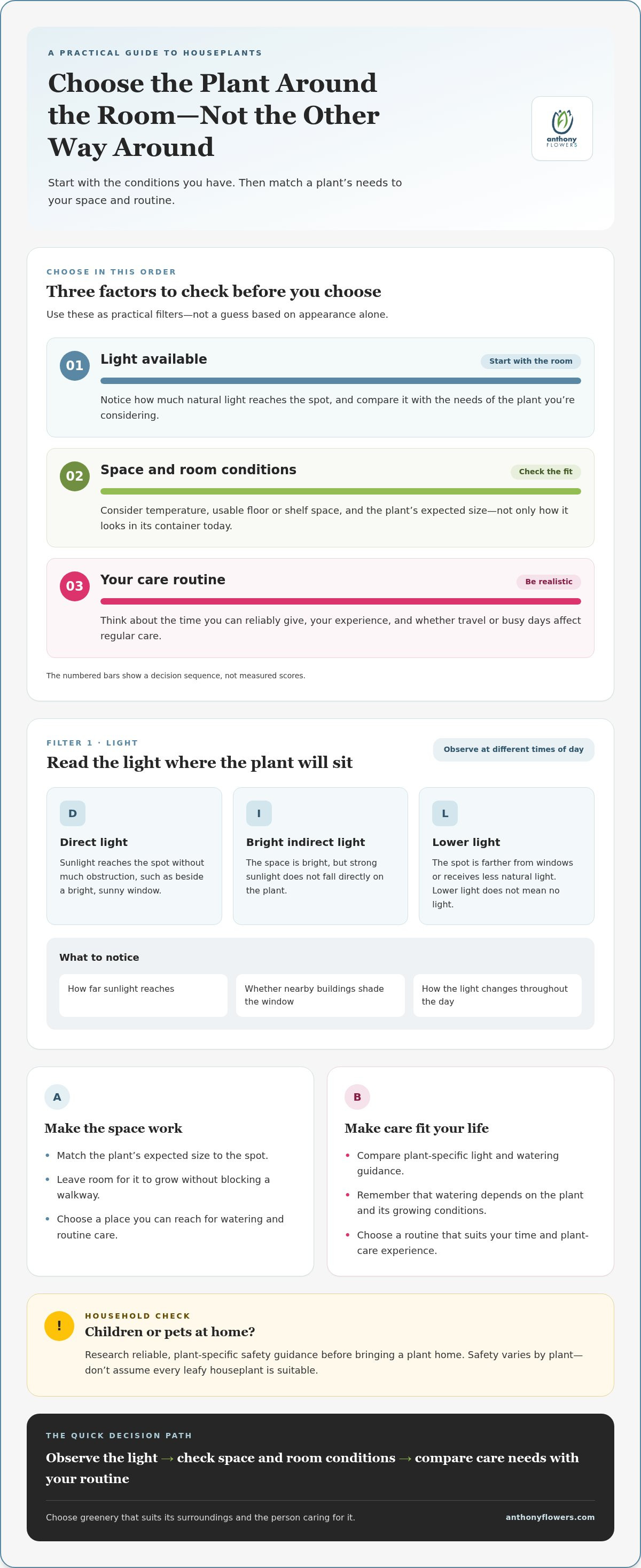
Start with the room, then consider who will care for the plant. Natural light, temperature, and available space help determine which options are suitable. A sunny windowsill is different from a dim hallway, and a clear floor area offers different possibilities from a crowded desk. Match the plant’s requirements to the conditions instead of assuming it will adjust to any spot.
Next, think about time and experience. Someone who enjoys regular plant care may welcome a more involved routine, while a busy beginner may prefer simpler requirements. If children or pets share the space, look up reliable, plant-specific safety guidance before bringing a plant home. Safety varies by plant, so don’t assume every leafy houseplant is suitable.
Use this quick check before choosing:
- Room: Note the light, temperature, and space available.
- Routine: Be realistic about the time you can give ongoing care.
- Household: Consider children and pets, and research the specific plant.
These details help you look beyond a plant’s first impression and choose greenery that is more likely to suit its new surroundings.
How to Choose Indoor Plants by Light, Space, and Routine
Begin with the room, not a shopping list. Assess its light and usable space, estimate how much time you can give plant care, then compare plants whose needs fit those conditions. This order helps you choose greenery that looks appealing and is practical to maintain.
How Much Light Does the Room Offer?
Direct light means sunlight reaches a spot without much obstruction, such as beside a bright, sunny window. Bright indirect light fills a space without strong sun falling directly on the plant. Lower-light areas sit farther from windows or receive less natural light. They still get some daylight: low light does not mean no light.
Observe the room at different times of day rather than judging it from one glance. Notice how far sunlight reaches, whether nearby buildings shade the window, and how the light changes throughout the day. Plant needs vary, so compare what you observe with care guidance for each option. The Royal Horticultural Society’s How to Choose Indoor Plants resource offers further houseplant advice.
Which Plant Fits Your Space and Care Routine?
Consider a plant’s expected size, not just how it looks in its container today. A windowsill or shelf may suit a compact option, while a larger plant needs floor space and room to grow without blocking a walkway. Check that you can also reach it easily for watering and routine care.
Care requirements vary. Some plants need more frequent attention than others, and watering depends on the plant and its growing conditions. Read plant-specific guidance before deciding; don’t assume a schedule that works for one plant will suit another. Your experience matters, too. A first-time owner may prefer a manageable routine, while someone with plant-care experience may be comfortable with more involved needs.
Consider a busy New Yorker who works long days and travels some weekends. A dramatic plant might catch their eye, but a better fit is one whose light and care requirements suit the home and the time they can reliably give. Plants should complement daily life, not create another source of stress.
- Assess: Observe the room’s light and note usable shelves, windowsills, and floor space.
- Estimate: Be honest about your time, travel, and plant-care experience.
- Compare: Check each plant’s light, size, and care requirements before choosing.
Ready to explore greenery for your home or as a gift? Browse the plants at Anthony Flowers.
Are Houseplants Hard to Care For? Compare Care Needs
Houseplants are not automatically difficult or easy to maintain. The effort depends on a plant’s needs and whether your home can meet them. A plant suited to your room and routine may be manageable; one placed in unsuitable light or watered by guesswork can struggle. Judge care by specific requirements, not claims that a plant is “impossible to kill.”
Which Care Factors Matter Most for Beginners?
Compare care instructions before choosing. Look for the required light level, watering guidance, humidity preferences, and expected growth space. The University of Minnesota Extension’s Houseplant Care Needs resource discusses practical care, including watering and light. Use guidance for the particular plant you’re considering, since requirements differ.
This comparison can help you interpret care labels and guides. It’s a framework, not a claim that every plant in a category has identical needs.
| Care profile | Light | Watering attention | Space | Beginner fit |
|---|---|---|---|---|
| Light-demanding | Requires the brighter conditions specified in its care guidance. | Follow its instructions and consider growing conditions rather than watering by habit. | Allow room for its expected mature size. | Consider it if you can provide the recommended light and routine. |
| Lower-light tolerant | May suit a less-bright spot, but still needs the light described for that plant. | Check its specific watering guidance; lower light does not mean no care. | Match its mature size to a shelf, windowsill, or floor space. | Could be a fit if its requirements align with your home and schedule. |
| More involved care | May have particular light or environmental preferences. | Follow its individual watering and humidity guidance. | Plan for its eventual growth and make sure you can reach it for care. | Better suited to someone prepared to follow a detailed routine. |
Overwatering is an avoidable problem, especially when care becomes a fixed calendar habit rather than following plant-specific instructions. Poor drainage and inconsistent conditions can also add stress. Pet safety is a separate consideration: research the exact plant’s safety guidance if animals or children share the home.
What If a Plant’s Leaves Start to Change?
Yellowing or drooping can have several causes, so don’t treat one symptom as a definite diagnosis. Review the plant’s light, watering, and drainage, and consider recent changes in temperature or placement. Compare what you observe with reliable care guidance for that plant.
Make one adjustment at a time, then observe the plant’s response before changing another condition. This measured approach can help you identify what may be affecting it without adding unnecessary changes. Good care is specific, steady, and suited to the plant’s environment.
How to Give a Plant as a Gift in New York
A plant makes a thoughtful gift when it suits the recipient’s home and habits, not just the occasion. Before choosing, consider where it might live, how much natural light that space receives, and whether the recipient has time and interest for ongoing care. A beautiful gift should feel welcome, not like an unexpected responsibility.
Is a Plant a Good Gift for Every Occasion?
Plants can mark a thank-you, celebrate a milestone, or welcome someone into a new home. Their greenery can last beyond the moment of giving, provided the recipient has space and wants to care for it. If they prefer a temporary display or enjoy the fresh color of a bouquet, cut flowers may feel more fitting. The gesture works best when it suits the person receiving it.
Think about the recipient’s preferences before choosing. Is there a clear place for a planter? Do they enjoy caring for living things, or would they rather admire an arrangement without an ongoing routine? For a polished floral display, explore modern floral arrangements as another way to make the occasion feel special.
What Should You Consider for a New York Delivery?
In New York, the destination can shape what makes a considerate gift. A residence may offer room for greenery, while a hospital or university setting may involve a smaller personal space and a busy schedule. Keep the recipient’s room, available light, routine, and ability to receive and care for a plant in mind. Anthony Flowers offers local delivery to residences, hospitals, and universities, including delivery to NY Presbyterian and Columbia.
A quick recipient check can guide your choice:
- Space: Consider whether there’s a suitable place for a plant.
- Routine: Think about the recipient’s schedule and comfort with ongoing care.
- Preference: Choose lasting greenery or cut flowers according to what they’ll enjoy.
- Setting: Keep the destination and the recipient’s ability to receive the gift in mind.
A well-chosen plant offers a personal alternative to cut flowers, while an arrangement brings its own occasion-ready beauty. Anthony Flowers is a family-owned New York florist established over 60 years ago, offering plants alongside flowers and gift baskets. Explore plant gifts from Anthony Flowers.
Find Plant Gifts in NYC with Anthony Flowers
A memorable plant gift starts with the person receiving it. In New York, one recipient may have a roomy home while another has a small office or hospital room. Thinking about the setting can make the gesture more personal. Consider the occasion, the recipient’s space, and whether they’ll enjoy caring for a living gift.
Why Choose a Local Florist for a Plant Gift?
Anthony Flowers is a family-owned New York florist established over 60 years ago. Its plants and gift baskets sit alongside floral offerings for different occasions, so you can choose a gift that reflects the moment, whether you’re celebrating, saying thank you, or sending a thoughtful surprise. For a birthday, the birthday flowers delivery NYC guide can help you consider a classic floral gesture alongside lasting greenery.
A local florist offers a way to send a gift to someone nearby in New York. The best choice still depends on the recipient: a plant may suit someone who welcomes ongoing greenery, while cut flowers may be more fitting for a celebratory display. Let personal preference lead rather than choosing a plant simply because it seems more lasting.
Anthony Flowers offers local delivery to New York residences, hospitals, and universities, including NY Presbyterian and Columbia. Whatever the destination, consider the recipient’s schedule and ability to receive the gift. A plant is most thoughtful when it can be welcomed into the space and cared for after it arrives.
What Is the Next Step for Choosing a Plant?
Bring the practical details together before choosing a gift. This short checklist can help:
- Space: Consider where the recipient could place a plant.
- Light: Think about the natural light available in that spot.
- Care routine: Choose with the recipient’s time and comfort in mind.
- Occasion: Decide whether lasting greenery or fresh flowers better suits the moment.
Plants can make a warm alternative to cut flowers, and gift baskets offer another thoughtful option. Anthony Flowers brings its family-owned florist experience to New York gifting, with local delivery to residences, hospitals, and universities. Browse plant and gift options on the Anthony Flowers website and choose a gesture that suits your recipient.
Choose Greenery That Feels Right at Home
The best indoor plant suits both its surroundings and the person caring for it. Consider the room’s light and space, then compare the plant’s care requirements with the owner’s routine. For a gift, think about whether the recipient would enjoy tending lasting greenery or prefer the occasion-ready beauty of cut flowers.
Plants and gift baskets are part of Anthony Flowers’ local floral and gift offering. This family-owned New York florist was established over 60 years ago and offers local delivery to residences, hospitals, and universities. A thoughtful choice starts with the recipient’s space, schedule, and the feeling you want your gift to express.
Ready to find a personal gift for a New York home or celebration? Explore plants and gifts from Anthony Flowers, and choose greenery that brings warmth to someone’s space.
Frequently Asked Questions
Are indoor plants good gifts?
Plants can be thoughtful gifts when they suit the recipient’s space, natural light, and willingness to care for a living plant. Consider whether they enjoy greenery and have a suitable place for it. If they prefer a temporary display or have limited room, cut flowers may be a better fit. Before choosing a plant, review its care requirements and reliable, plant-specific pet-safety guidance if animals share the home.
Can plants thrive in rooms with low light?
Some plants tolerate lower-light conditions better than others, but don’t assume any plant will thrive in every dim room. Observe how much natural light the space receives, then compare it with verified guidance for the specific plant. A spot that looks bright to you may still receive limited light for a plant. If the room has very little natural light, consider another location or a different kind of gift.
How often should you water indoor plants?
There’s no single watering schedule that works for every indoor plant. Watering needs can depend on the plant, pot, soil, light, temperature, and season. Follow reliable care instructions for the specific plant and check its growing medium before watering rather than relying only on a weekly reminder. Too much water can cause problems, as can letting a plant become too dry, so adjust to its conditions.
What happens if a houseplant’s leaves turn yellow?
Yellow leaves can have several causes, including changes in watering, light, or the plant’s surroundings. Check the plant’s care guidance and consider whether its location or routine has changed recently. One symptom does not prove a single cause. Make a measured adjustment, then observe how the plant responds before changing anything else. If the condition continues, use reliable guidance specific to that plant to help assess what may be happening.
Are indoor plants safe for pets?
Pet safety depends on the plant species, the animal, and whether the plant can be reached. Don’t assume a plant is safe based on its appearance or a general label. Identify the exact plant and consult a reliable, current veterinary or poison-control resource before bringing it into a pet’s home. If you can’t establish that it’s suitable for the household, choose another gift, such as cut flowers or a gift basket.
Which plants are easiest for beginners to care for?
The best beginner plant depends on the home’s light, available space, and the owner’s routine. Rather than relying on a universal “easiest plant” list, compare reliable care guidance for options suited to the room. Consider light requirements, watering attention, and mature size. A plant that fits its environment and your schedule is usually more practical than one selected for appearance alone.
Can I send a plant to someone in a New York hospital?
A plant can be a warm gift, but consider the recipient’s circumstances and the room’s space and light before choosing one. Hospital rooms and receiving arrangements can vary, so don’t assume every location suits a plant or that the recipient can care for it. Anthony Flowers offers local delivery to New York hospitals, including NY Presbyterian. Choosing a gift that fits the person and setting helps make the gesture more thoughtful.


