

A bouquet can brighten a hospital room, but some hospitals restrict fresh flowers, especially in intensive care and other units caring for patients with compromised immune systems. If flowers are allowed, non-allergenic flowers for hospital delivery generally means lower-pollen options such as roses, tulips, and orchids. These may reduce airborne pollen exposure, but no flower is right for every patient.
Before sending flowers, consider the patient’s sensitivities and the hospital setting. Pollen isn’t the only concern: strong fragrance can be uncomfortable, and some hospital areas don’t permit flowers at all. This guide explains why restrictions exist, which flowers may be gentler for people concerned about allergies, and what to consider if flowers aren’t suitable. That makes it easier to choose a thoughtful get-well gift.
Key Takeaways
- Learn why hospitals may restrict fresh flowers, and how heavier, stickier pollen is less likely to become airborne than light, dusty pollen.
- Compare lower-pollen blooms with dried flowers and houseplants as alternatives when a bouquet may not suit the setting.
- Consider fragrance as well as pollen: a strongly scented flower can be uncomfortable for someone with sensitivities.
- Explore hydrangeas, carnations, and snapdragons as possible choices, then weigh their qualities against the recipient’s needs.
1. Why Some Flowers Not Allowed in Hospitals?
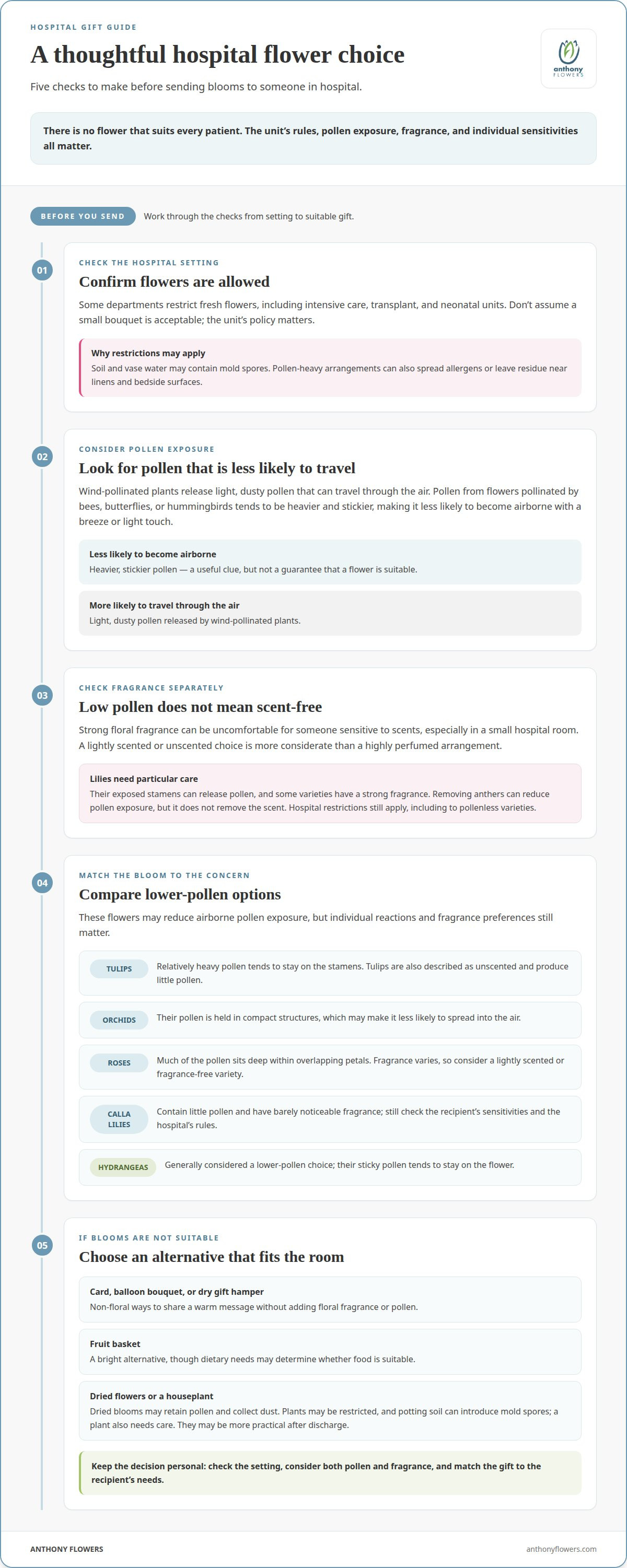
Hospital flower restrictions can reflect more than pollen sensitivity. Soil and vase water may contain mold spores, and some departments, including intensive care, transplant, and neonatal units, restrict fresh flowers. Pollen-heavy arrangements may also spread allergens or leave residue near linens and bedside surfaces. Whether a bouquet is appropriate depends on the patient’s unit and the hospital’s rules.
Pollen type matters. Wind-pollinated plants release light, dusty grains that can travel through the air and into the respiratory system. Flowers pollinated by bees, butterflies, or hummingbirds tend to produce heavier, stickier pollen that is less likely to become airborne with a breeze or light touch. This may reduce airborne exposure for people with allergies. Pollination style is a useful clue, but it doesn’t make a flower suitable for every recipient.
Tulips are one lower-pollen option: their pollen is relatively heavy and tends to stay on the stamens. Orchids hold pollen in compact structures, while roses keep much of it deep within overlapping petals. These features may make some flowers less likely to release pollen into the air, though pollen exposure varies by flower.
Lilies need special consideration. Their exposed stamens can release pollen, and some varieties have a strong fragrance. Removing the anthers when a lily bud opens can reduce pollen exposure. Double-flowered oriental lily hybrids are pollenless, but hospital restrictions still apply regardless of variety.
Newborns and their families may be in neonatal units where fresh flowers are restricted. Don’t assume a small bouquet is acceptable: the unit’s policy matters. The cost of a low-allergen arrangement depends on the flowers selected, arrangement size, seasonal availability, and delivery details. Fewer pollen-prone blooms can shape the design, while practical factors still affect the total.
2. What Flowers are Hypoallergenic?
“Hypoallergenic” doesn’t mean a gift is free from every possible trigger. Non-allergenic flowers for hospital delivery can include lower-pollen choices such as roses, orchids, and calla lilies, but fragrance and individual sensitivities matter too. For someone who reacts strongly to flowers, a non-floral gift may be more thoughtful than searching for a perfect bloom.
Dried flowers offer lasting color, but they aren’t automatically better for allergy concerns. Their petals and stems can collect dust, and dried blooms may retain pollen. A bright dried arrangement may suit someone who enjoys floral décor, but it may not suit someone sensitive to airborne particles or dust. Consider the recipient’s sensitivities before choosing dried flowers.
Houseplants bring greenery without a vase of cut blooms, but they aren’t suitable for every hospital room. Some units restrict plants, and potting soil can introduce mold spores. A plant also needs care, which may be an extra task during recovery. Succulents, snake plants, and trailing pothos are examples of indoor plants. For a hospital stay, a small plant is easier to place than a sprawling one. Plants may be more practical after discharge, when the recipient can choose a spot and manage watering.
If a hospital setting rules out flowers and plants, consider a card with a warm personal message, a balloon bouquet, or a dry gift hamper. A fruit basket can be a bright alternative, though dietary needs may determine whether food is suitable. Choose a gift that’s easy to enjoy and simple to set aside in a busy room.
Choosing non-allergenic flowers for hospital delivery also means considering the setting and the recipient’s comfort. For a botanical gesture after discharge, indoor plants offer a living alternative to cut flowers. For someone who can’t receive blooms or greenery, a sincere note shares your care without adding pollen, fragrance, or upkeep.
3. What to Get Someone Who is Allergic to Flowers?
For someone sensitive to flowers, consider fragrance as well as pollen. A hypoallergenic label doesn’t mean a bouquet is scent-free. Strong floral fragrance can cause discomfort for sensitive people, including hospital patients recovering from surgery or illness. A lightly scented or unscented choice is more considerate than a highly perfumed arrangement.
Lilies deserve particular care. Oriental lilies can combine pollen-heavy stamens with a strong fragrance, creating two possible sources of discomfort. Their scent may feel especially intense in a small hospital room. Removing anthers reduces pollen exposure, but it doesn’t remove fragrance. If scent sensitivity is the concern, choose another flower instead of relying on that step alone.
Calla lilies are a gentler option to consider for someone who dislikes strong floral scents. They contain little pollen and have barely noticeable fragrance. Their smooth, sculptural shape gives an arrangement an elegant look without relying on highly scented blooms. Even lower-pollen flowers may not suit everyone with allergies, so fragrance preferences still matter.
Tulips are another option: they’re unscented and produce little pollen. Their cup-shaped petals keep pollen tucked away, making them a practical choice for a spring bouquet. Roses can also be lower in pollen, but their fragrance varies. Choose a lightly scented or fragrance-free rose rather than assuming every variety smells the same.
For severe sensitivities, skip flowers and scented gifts. A card, balloon bouquet, or dry gift hamper can share a warm message without adding floral fragrance to the room. Plants are another possibility for someone returning home, but they need care and may be restricted in hospital areas. Match the gift to the recipient’s sensitivity, the setting, and whether scent is welcome.
4. Hydrangeas, carnations, and snapdragons
Yes. Roses, orchids, tulips, and hydrangeas are generally considered lower-pollen choices because their pollen is less exposed or less likely to become airborne. They may suit a sensitive recipient, though individual reactions and fragrance preferences still matter.
Hydrangeas have sticky pollen that tends to stay on the flower, and many decorative varieties produce little pollen. Their full clusters create a beautiful focal point without prominent stamens. Carnations also have a layered structure that limits access to their stamens, making them another option to discuss with a florist for a low-pollen arrangement.
Snapdragons offer another useful feature: their stems naturally trap pollen inside the flowers. The pollen is less exposed during ordinary handling, so snapdragons can add height and shape to a mixed bouquet. For an allergy-conscious design, pair them with blooms whose pollen is less exposed rather than treating one flower as a complete solution.
Orchids and calla lilies are also considered low-pollen choices, with little fragrance. Orchids hold pollen in compact structures, while calla lilies have a simple, sculptural form. These qualities may suit someone sensitive to airborne pollen and strong scents. They can create an elegant arrangement without the heavily scented presence associated with some lilies.
Peonies have thick, sticky pollen, while iris pollen is heavy and stays deep inside the flower. Both offer distinct shapes and soft, expressive colors for a thoughtful gift. By contrast, sunflowers have exposed pollen and may be less suitable for someone with pollen sensitivity. A florist can consider flower structure, scent, and the patient’s setting when helping guide a careful selection.
Choose a lower-pollen design for a considerate hospital gift. Explore hospital flower options for a fresh arrangement suited to the occasion.
Anthony Flowers: Anniversary Flowers
Anthony Flowers offers Anniversary Flowers for celebrating a meaningful milestone and Get Well Flowers for sending care during recovery. After considering pollen, fragrance, and hospital restrictions, choose a floral gift only if it suits the recipient and setting. If flowers aren’t appropriate, a sincere card can still share your support.
For a hospital stay, a get-well arrangement can be a thoughtful gesture when the patient’s unit permits flowers and the recipient is comfortable receiving them. For an anniversary, flowers can mark the occasion with warmth and a personal touch. The right choice depends on the moment and the person receiving it.
Contact Anthony Flowers to explore an arrangement for your occasion.
Make your gesture personal
A thoughtful gift is about more than what arrives at the door. It’s a reminder that someone is remembered, and the care behind your choice can make that message personal. Keep the recipient’s preferences at the center, especially when choosing non-allergenic flowers for hospital delivery. A note in your own words adds meaning without making the gift more complicated.
Anthony Flowers offers Anniversary Flowers, Birthday Flowers, and Sympathy & Funeral Flowers for life’s meaningful moments. Choose an arrangement that reflects the occasion and the feeling you want to share, whether celebration, affection, or comfort. A simple, sincere message can make the gesture feel unmistakably yours.
Contact Anthony Flowers for help choosing a fitting floral gift. May your gesture bring a little brightness and connection to someone’s day.
Frequently Asked Questions
Why are some flowers not allowed in hospitals?
Some hospital units restrict flowers because pollen, soil, and vase water can create concerns for patients and staff. Rules may differ between a general ward and a neonatal or transplant unit, so a building-wide assumption may not apply to the patient’s room. For a New York delivery, include the patient’s full name and room number when available to help staff identify the gift.
Should you send flowers or a plant?
During a hospital stay, flowers are the simpler choice only when the unit permits them. They arrive ready to display, while a plant needs ongoing care and may bring potting soil into the room. A plant may make more sense after discharge, when the recipient can choose where to put it and whether they want to care for it.
What flowers are hypoallergenic?
Roses, tulips, orchids, calla lilies, and hydrangeas are commonly treated as lower-pollen options. “Hypoallergenic” describes a reduced likelihood of airborne pollen exposure, not a universal response for every person. For a considerate choice, favor flowers with less exposed pollen and a mild scent, then account for the recipient’s known sensitivities and the hospital setting.
What should you get someone who is allergic to flowers?
A card, balloon bouquet, or dry gift hamper can express care without adding fresh blooms to the room. A short, personal message makes a card more specific than a generic greeting. If considering a fruit basket, think about the recipient’s dietary needs first. For someone returning home, a non-floral gift avoids both pollen and flower fragrance.
Are orchids hypoallergenic?
Orchids are generally considered a low-pollen choice because their pollen is held in compact structures rather than scattered freely during ordinary handling. Their elegant shape can make a thoughtful gift for someone who wants flowers with less airborne pollen. Fragrance preferences and the hospital’s flower policy still matter when choosing orchids for a patient’s room.
Are roses hypoallergenic?
Roses are often considered lower in pollen because their layered petals hold pollen within the flower head. Their scent varies, so a fragrant rose may not suit someone sensitive to floral smells. For a hospital gift, choose a lightly scented or fragrance-free style and consider whether the recipient likes roses before sending a bouquet.


