

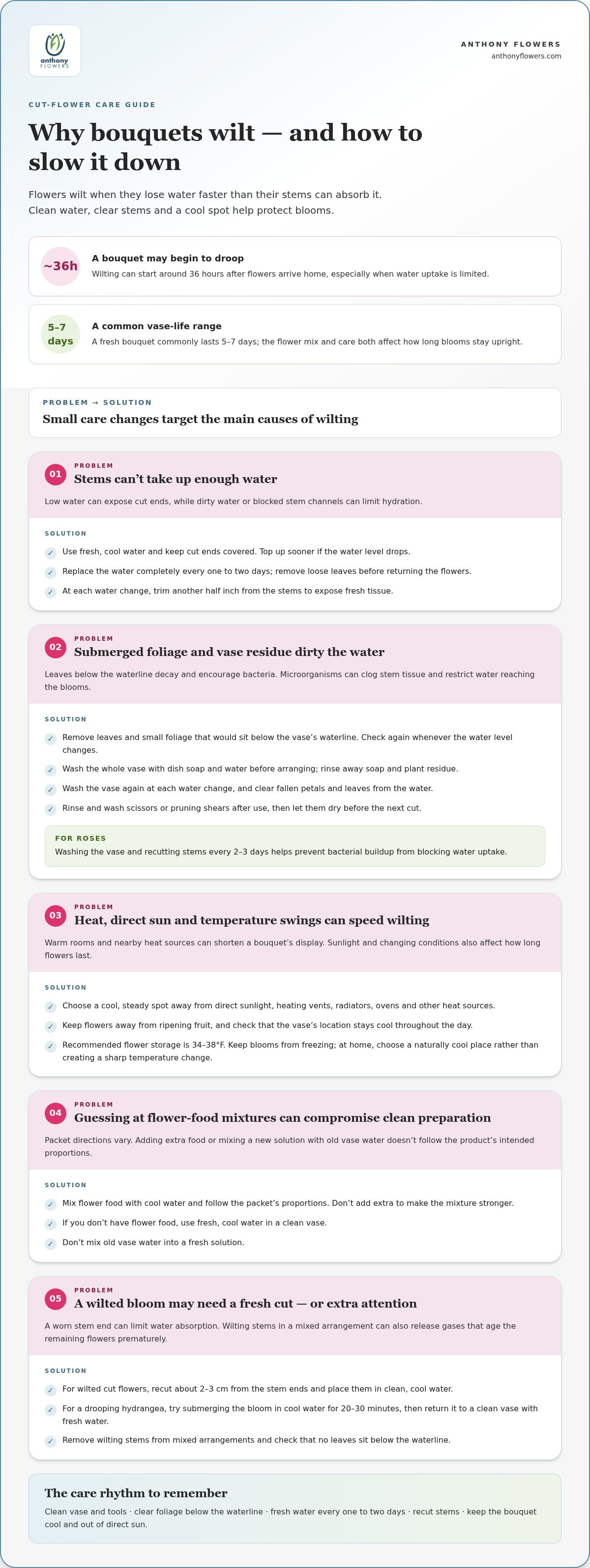
A bouquet can start to droop around 36 hours after you bring it home. If you’re wondering why your flowers are dying so fast, the usual culprit is water loss: blooms wilt when they lose water faster than they can absorb it. A fresh bouquet commonly lasts 5-7 days, depending on its flowers and how you care for it.
It’s frustrating to watch fresh, colorful stems fade before you’ve had time to enjoy them. A few simple adjustments can help keep the water clean, hydrate the blooms, and protect them from conditions that speed up wilting.
Wash the vase, trim the stems, refresh the water, and choose a cool spot away from direct sunlight and heat. These practical steps can help your flowers stay bright and lovely for longer.
Key Takeaways
- Remove leaves below the waterline and refresh the vase water every day or two to help keep it clean.
- Wash the vase before arranging flowers, and rinse away residue when refreshing it.
- Choose a cool spot away from direct sunlight, heating vents, and ripening fruit.
- Use clean, sharp tools to recut stems before placing blooms in fresh water.
- Follow the flower food packet’s mixing directions, or use fresh, cool water if you don’t have flower food.
Why are my flowers dying so fast?
Flowers wilt when they lose water faster than their stems can absorb it. Clean water, clear stems, and steady hydration help slow the process.
-
Remove Foliage Below the Waterline
Remove leaves and small foliage that would sit below the vase’s waterline. Submerged leaves decay, encouraging bacteria and making it harder for stems to take up water. Check each stem as you arrange the bouquet, then remove leaves that could become submerged as the water level changes.
To help cut flowers last longer in a vase, keep foliage above the water and refresh the water every day or two. A bouquet may start drooping around 36 hours after arriving home, especially if water uptake is limited.
-
Change Water and Maintain Vase Levels
Replace the vase water completely every one to two days, and top it up sooner if the level drops. Stems need continuous access to water; a low level can leave their cut ends exposed. Use fresh, cool water, and remove loose leaves from the vase before returning the flowers.
When you change the water, trim another half inch from the stems. This exposes fresh tissue for water uptake. A fresh bouquet commonly lasts five to seven days, depending on its flower mix. Flower type and care both affect how long blooms remain upright.
There’s no single water-free delivery duration for every bouquet. Heat, flower type, and how hydrated the stems were before transit all affect how quickly they lose moisture, so place delivered flowers in water promptly.
-
Revive Wilted Cut Flowers
Recut wilted stems by removing about 2-3 cm from their ends, then place them in clean, cool water. This gives stems a fresh surface for absorbing water. Check that no leaves sit below the waterline, since decaying foliage can contribute to dirty vase water and obstruct good care.
For a drooping hydrangea, submerge the bloom in cool water for 20-30 minutes as a revival attempt. Afterward, return it to a clean vase with fresh water. Remove wilting stems from mixed arrangements, too, so they don’t contribute gases that can age the remaining flowers prematurely.
Make foliage checks part of arranging and every water refresh. Inspect the stems where they meet the water, then remove any leaves or branches that would sit below the waterline. This helps keep vase water clean and limits bacterial growth. Check the waterline rather than relying on how the arrangement looked when you first placed it in the vase. After topping up or replacing the water, look around the vase again and clear anything now submerged. Keep the stems arranged so you can spot foliage hidden among them. Remove submerged growth as soon as you notice it. A quick visual check makes this step easy to repeat and supports the clean-water routine alongside regular water changes and stem trimming.
Cleaning the vase to reduce bacteria
Wash the vase and flower-care tools before preparing a fresh arrangement. Bacteria and other microorganisms can clog stem tissue, restricting the water that reaches each bloom.
- Wash the vase before adding flowers. Clean the inside with dish soap and water, paying attention to the base and narrow neck where residue can collect. Rinse away soap and leftover plant material before filling it. A visibly clean rim doesn’t mean the bottom is free of old water deposits, so wash the whole container.
Clean the vase again whenever you replace its water. For roses, washing the vase and recutting the stems every 2-3 days helps prevent bacterial buildup from blocking water uptake. Remove fallen petals and leaves during each change, since plant debris can break down in the water.
- Clean tools before they touch fresh stems. Rinse and wash scissors or pruning shears after use, especially if they have residue from previous stems. Dirty cutting surfaces can transfer microorganisms to fresh tissue. Keep tools separate from food-preparation surfaces, and let them dry after washing.
Flower stems have internal channels that carry water upward. Bacteria can obstruct those channels, leaving a bloom short of moisture even when its vase appears full. Clean equipment and a washed container help keep water pathways clear, but don’t replace regular water changes.
- Use flower food according to its packet. Flower food helps regulate water pH, support water uptake, and provide nutrients as blooms continue developing. Mix it with cool water when the directions call for it. Some packets use one pint of water, but instructions vary, so measure the amount specified on the product.
Don’t add extra flower food to make the mixture stronger. Follow the packet’s proportions for that product. If you don’t have flower food, fill the clean vase with fresh, cool water instead. Avoid mixing old vase water with a new solution, because residue can compromise clean preparation.
- Choose cool water for the arrangement. Cool water is usually recommended when mixing flower food, and fresh, cool water works when no food is available. Use the same approach for mixed bouquets unless the flowers’ care instructions say otherwise. Avoid guessing at different temperatures for individual varieties.
Clean the container and tools as part of each refresh, not only when the water looks cloudy. For a gift with fresh blooms, browse anniversary flowers, then use these vase-care steps after arranging them.
Cool storage and avoiding direct sunlight
Choose a cool, steady spot for fresh-cut flowers, then check it throughout the day. Sunlight, nearby heat, and temperature swings can shorten a bouquet’s display.
-
Store Flowers in a Cool Place
Move the vase to a cool room away from radiators, ovens, and other heat sources. Cooler, nonfreezing temperatures help cut flowers last longer at home. The recommended storage temperature for flowers is between 34 and 38 °F, but don’t let blooms freeze.
At home, focus on choosing a naturally cool location rather than creating a sharp temperature change. Some delicate flowers, including some tulips, may last only 3-5 days, especially in warm rooms. Check the spot at different times, since a sunny window can heat up as daylight moves across it.
-
Avoid Sunlight, Heat, Drafts, and Vents
Place the vase away from direct sunlight and heating vents. A sunny windowsill may feel pleasant, but direct sun and warm air can increase moisture loss from stems and petals. Avoid placing blooms beside a radiator, fireplace, or stove, where heat can reach them even when the room feels comfortable.
Keep flowers clear of strong drafts from open windows and air-conditioning outlets. Moving air can dry petals and leaves, while abrupt temperature shifts can stress fresh-cut stems. Choose a calm place with steady room conditions, and move the arrangement if a vent blows directly across it.
- Keep bouquets away from hot or cold vehicles. If you’re transporting flowers by car, don’t leave them in a vehicle with extreme temperatures. A car that is too hot or cold can damage roses. Bring the bouquet indoors promptly and place it in a cool location, away from direct sun.
- Separate flowers from ripening produce. Keep the vase away from fresh fruit, especially apples and bananas. Ripening produce can release ethylene gas, which causes flowers to age prematurely. A kitchen counter beside a fruit bowl may expose blooms to this gas, even when the vase is away from the stove.
- Recheck the display as the light changes. A table may be shaded in the morning but receive direct afternoon sun. Watch for sunlight reaching the petals, warm air from a vent, or heat building near a window. Move the arrangement as conditions change, keeping it cool and away from drafts.
Trimming stems and using sharp tools
Give each stem a clean, fresh cut before arranging flowers. Sharp tools and timely trimming help keep the cut ends open for water uptake.
- Prepare clean, sharp scissors or shears. Use a sharp tool to make a smooth cut instead of crushing the stem. Crushed tissue can interfere with water movement. Wash the tool before cutting, especially if it has been used on older flowers, and keep the blades steady as you work through the bouquet.
- Trim stems before arranging them. Cut about one inch from each stem’s base before placing flowers in a vase. For dry-pack flowers, make a fresh cut as soon as they arrive. Stems left out of water can begin to seal over after 30 minutes, so prepare the vase first and work promptly.
- Make each cut at an angle. A 45-degree cut leaves the stem end angled rather than flat. The angle doesn’t make flowers drink more by itself, but it can stop a stem resting flat against the vase bottom and blocking water intake. Check the cut ends after arranging the bouquet.
- Re-trim stems every few days. Remove 1-2 cm from the ends when refreshing an arrangement. This exposes a new surface as the older cut end starts to close or collect residue. Use the same sharp tool, and return each stem to water promptly after cutting.
For another routine refresh, remove about half an inch when changing vase water. These amounts describe separate suggested trimming routines, so avoid removing more stem than needed at each refresh. Shorter stems can take up water more effectively and may extend vase life.
- Inspect brown or damaged ends. If a stem end looks brown, trim it back to fresh tissue before returning the flower to its vase. For cut roses, trim the stem at an angle under running room-temperature water, then use the flower preservative supplied with the roses. This keeps the fresh cut from sitting exposed while you prepare the arrangement.
- Remove stems that are wilting. Check the arrangement during each water change and remove blooms that are fading. A wilting stem can release gases that prematurely age surrounding flowers. Recut healthy stems during the same care session, then return them to clean water without leaving their ends exposed.
Using flower food and hydration solutions
Flower food can help cut flowers stay hydrated and continue developing. Follow the packet directions, mix it with cool water, and don’t guess at the proportions.
-
Understand Flower Food Ingredients
Use flower food to support water uptake, provide nutrients, and regulate water pH. These functions help blooms continue developing after cutting. Flower food also helps defend fresh flowers against bacteria that can contribute to premature wilting.
Check the packet for mixing instructions rather than assuming every floral preservative has the same formula. Its ingredients work together, so adding extra powder or combining products can change the intended solution.
-
Mix Flower Food Correctly
Measure the water and flower food according to the packet directions. Some packets are mixed with one pint of water, but instructions vary by brand. Use cool water, which is usually recommended for preparing the solution, and stir until the powder dissolves.
Don’t estimate the amount by eye or add more food to strengthen the mixture. A correctly prepared solution gives stems water and nutrients in the intended proportions. If the packet specifies a different water volume, follow those directions.
- Prepare a fresh solution for the vase. Empty the old water before adding the mixture. Leftover water can dilute the new solution and carry plant debris into it. Rinse the vase, then add the prepared flower food and arrange the stems.
- Use fresh, cool water when you have no flower food. Flower food is useful, but fresh water is a practical alternative when a packet isn’t available. Fill a clean vase with cool water, then place the cut stems in it. Don’t add an improvised mixture of household ingredients, which can alter the water without providing the balanced support of floral food.
- Refresh the solution as part of regular care. Replace vase water every one to two days, and prepare a fresh mixture each time you use flower food. Follow the packet’s proportions again instead of topping up with concentrated solution. This keeps water and nutrients consistent as the flowers continue developing.
- Choose blooms for a thoughtful gift. A fresh arrangement brings color and care to an important moment. Explore flowers for a special occasion, then use the flower food directions to support the blooms at home.
One suggested cut-rose water mixture is 1/3 tonic water and 2/3 water. Treat this as a specific option for roses rather than a universal formula for every arrangement. If you use it, prepare the mixture in a clean container and keep it separate from flower food or other additions, so the proportions remain as suggested. This gives you a simple alternative to consider when caring for cut roses, while the packet directions remain the guide for any floral preservative you choose to use.
Whichever solution you choose, do so before arranging the stems and avoid switching mixtures without refreshing the vase. Keep the vase clean, remove fading material, and observe the blooms as part of regular care. If the flowers begin to decline, check that the stems are in fresh solution and that no old water or debris remains. Consistent preparation helps you care for the arrangement without guessing at proportions or combining different products.
Anthony Flowers: Anniversary Flowers
Anthony Flowers offers Anniversary Flowers for marking a meaningful date with fresh blooms. Choose an anniversary arrangement to share affection, or consider Birthday Flowers, Sympathy & Funeral Flowers, or Get Well Flowers when another occasion calls for flowers. The right bouquet gives your sentiment a thoughtful, tangible expression, whether you’re celebrating together or sending comfort from afar.
After choosing your flowers, use the care steps above to help keep the arrangement looking fresh at home. Clean water, a freshly trimmed stem, and a cool spot can support the blooms as they open. For anniversary flowers and other occasion arrangements, visit Anthony Flowers online.
Make Your Next Bouquet Part of the Moment
Fresh flowers can mark a milestone, brighten an ordinary day, or bring comfort when words feel difficult. As you choose your next arrangement, think about the feeling you want it to carry and where it will be enjoyed. That small intention can make the gesture feel more personal, whether you’re celebrating together or sending blooms across the city.
If you’re still wondering why your flowers are dying so fast, consider the whole journey from arrival to display, including the room and routine around them. Anthony Flowers offers Anniversary Flowers, Birthday Flowers, and Sympathy & Funeral Flowers for meaningful occasions. Select blooms that suit the moment, then give them a place where you can enjoy their color and fragrance.
Contact Anthony Flowers for flower care advice, and make your next bouquet a thoughtful part of someone’s day.
Frequently Asked Questions
Why are my cut flowers wilting or dying quickly?
Cut flowers wilt when they lose water faster than they can absorb it. A rose that droops while the vase is full may have restricted water uptake, or it may have been cut long before purchase. Flower type matters too: delicate tulips can fade sooner than hardier blooms. Check whether the stems remain firm and whether the bouquet is exposed to warm, dry air.
How long should common cut flowers last in a vase?
A fresh mixed bouquet commonly lasts 5-7 days, though its flowers affect the total. Hardier mums, carnations, and alstroemeria can last 7-14 days, while some tulips may last 3-5 days, especially in warm rooms. Treat these ranges as a guide for planning, not a guarantee for every stem. A bouquet with different varieties may fade in stages rather than all at once.
How often should I change vase water and recut flower stems?
Replace the water every 1-2 days and recut the stems when refreshing it. Removing another half inch gives each stem a fresh cut surface. For a mixed bouquet, handle stems gently and return them to water promptly. If the vase becomes cloudy sooner, refresh it then rather than waiting for the usual interval, and remove loose plant debris during the change.
Which locations or conditions make cut flowers wilt faster?
Direct sunlight, heating vents, and other heat sources can speed wilting by increasing moisture loss. Keep the vase away from fruit bowls, especially apples and bananas, because ripening produce releases ethylene that can age blooms prematurely. Avoid leaving roses in a car that is too hot or cold. A stable, cool spot away from drafts is a better display location.
How do bacteria in vase water affect cut flower lifespan?
Bacteria and other microorganisms can clog the stem tissue that carries water to flowers. As water uptake slows, blooms may wilt even when the vase still contains water. Fallen leaves and other plant debris can dirty the water, so remove them during water changes. If stems look clear but flowers droop, inspect the cut ends and refresh the vase setup.
What water temperature is best for different cut flowers?
Use fresh, cool water for cut flowers, including mixed bouquets, unless the flowers’ care instructions say otherwise.


