

The prettiest dracaena plant may not be the best fit for your room. A tall, leafy variety can make a striking statement, but it still needs suitable light and enough space to grow.
It’s easy to focus on leaf color and shape when choosing a houseplant, then worry about watering or browning tips once it’s home. Matching a dracaena to your space and routine makes care more manageable. This guide explains how to choose a variety and size, meet its light and watering needs, and spot common problems early.
You’ll also find practical advice on repotting, pet safety, and what to check before bringing a new plant home. If you’re exploring local options, Anthony Flowers offers plants and gifts in New York. Check the current selection to see whether dracaena is available, and confirm delivery coverage for your address before ordering.
Key Takeaways
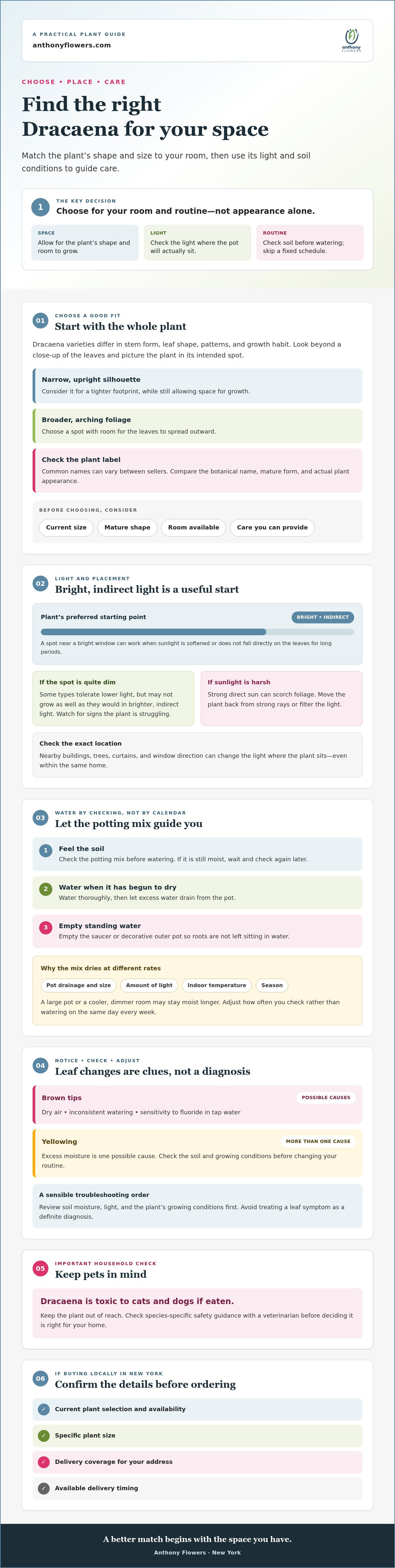
- Choose a dracaena plant for its shape and the room it needs, not appearance alone.
- Use bright, indirect light as a starting point, and check the soil before watering.
- Compare varieties by their leaf features, mature size, and care needs to find a good fit for your space.
- Brown tips and yellowing can have several causes, so review the plant’s conditions before changing your care routine.
- Before ordering locally, confirm the current selection, plant size, delivery coverage, and available timing.
Is a Dracaena Plant Right for Your Home?
Dracaena is a genus of foliage plants grown indoors for their sculptural stems and distinctive leaves. Many have upright growth and long leaves, but their shapes and patterns vary by species and cultivar. A dracaena plant may suit a bright living room, an office corner, or another spot with room for its particular growth habit. The best match depends on the light and space you can provide, as well as your watering habits.
“Easy care” doesn’t mean every dracaena will thrive in every room. Plant size, growing conditions, and variety all affect what it needs. For an overview of its classification and species, explore the Dracaena genus.
What does a dracaena plant look like?
There’s no single dracaena look. Some types grow from woody, cane like stems, with foliage gathered near the top. Others have slender leaves that rise and arch outward for a softer silhouette. Leaf color ranges from solid green to striped or edged patterns, depending on the type. When comparing plants, look at the whole shape, not just a close-up of the leaves. A clear photograph or labeled caption can show differences in stem form, leaf width, and variegation, but check the actual plant’s appearance before choosing.
Is dracaena a good indoor plant for beginners?
It can be a good choice if you can provide suitable indoor conditions and pay attention to how the plant responds. Many dracaenas adapt to indoor spaces, but they still need care. A dim corner, consistently wet soil, or a spot without room for the plant to grow may not suit your chosen variety. Consider where it will sit and how its size and shape will fit the room before bringing it home.
Households with pets should take extra care: dracaena plants are toxic to cats and dogs if eaten. Keep the plant out of reach, and check species specific safety guidance with a veterinarian before deciding it’s right for your home. With a suitable location and a little observation, you can choose a variety that fits your space rather than relying on a generic promise of low maintenance.
How Much Light and Water Does a Dracaena Plant Need?
Bright, indirect light is a useful starting point for many commonly grown dracaenas. Look for a spot near a bright window where sunlight is softened by a sheer curtain or does not fall directly on the leaves for long periods. Some types tolerate lower light, but tolerance isn’t the same as preference: a dracaena may endure dim conditions without growing as well as it would in brighter, indirect light.
Where should you place a dracaena indoors?
Check the light where the plant will actually sit, not just the overall brightness of the room. Notice how nearby buildings, trees, curtains, and window direction affect the light throughout the day. In a New York apartment, one room may have an open, bright exposure while another faces a narrow courtyard and stays dim. Harsh direct sun can scorch foliage, so move the plant back from strong rays or filter them. If the spot is quite dark, watch the plant’s growth and consider a brighter position if it struggles.
How do you water dracaena without overwatering?
Skip a fixed weekly schedule. Before watering, feel the potting mix. If it’s still moist, wait and check again later. When it has begun to dry, water thoroughly and let excess drain from the pot. Empty the saucer or decorative outer pot afterward so roots aren’t left sitting in standing water.
How quickly the mix dries depends on the pot’s drainage and size, the amount of light it receives, indoor temperature, and the season. A plant in a large pot or a cooler, dimmer room may stay moist longer than one in a smaller pot in a bright, warm spot. Adjust your checks to those conditions rather than assuming the plant needs water on the same day every week.
Leaves offer clues, not a diagnosis. Brown tips may be associated with dry air, inconsistent watering, or sensitivity to fluoride in tap water. Yellowing can have more than one cause, including excess moisture. Check the soil and growing conditions before changing your routine. Clemson University’s Dracaena care guide covers growing conditions and common issues, including root rot and water sensitivity.
To explore plants and gifts from Anthony Flowers, browse the current selection. Check availability before choosing a specific plant.
Which Dracaena Types Suit Your Space and Plant Preferences?
Start with the plant’s shape, then picture it in the room. Match a dracaena’s mature form to the space: choose a narrow, upright silhouette for a tight footprint, or allow room for broader, arching foliage. A small plant may look compact at first, so consider its growth habit as well as its current size.
Common names can be confusing. “Dragon tree” and “corn plant” are used for particular dracaenas, while labels may vary between sellers. Check the botanical name on the label, and compare the plant with reliable references such as the NC State Extension Gardener Plant Toolbox.
How do Dracaena marginata and Dracaena fragrans differ?
These familiar types have distinct silhouettes. Dracaena marginata, often called dragon tree, typically has slender, pointed leaves clustered on narrow stems. The foliage may have reddish edges. Dracaena fragrans, commonly called corn plant, usually has wider, strap like leaves and sturdy cane like stems. Some cultivars have contrasting stripes, but patterns vary, so check the plant’s identification rather than assuming every corn plant looks alike.
Dracaena marginata: Fine, narrow foliage and an upright, airy form. Consider it where floor space is limited, while leaving clearance for the leaves and eventual growth.
Dracaena fragrans: Broader leaves and a fuller visual presence. Check the plant’s width and height against the available floor or table area, and make sure its foliage won’t crowd nearby furniture.
Neither type is universally better. Consider the room’s proportions, whether you prefer a slender or leafy look, and how much space you can leave around the plant. Mature size depends on the specific cultivar and growing conditions, so ask for the variety and expected growth habit rather than relying on a generic size estimate.
What should you check before choosing a dracaena?
Look closely before bringing a dracaena plant home. Confirm its botanical name, measure the plant, and consider where its leaves and stems can spread without blocking a walkway or window. Examine both sides of the foliage and the growing medium for visible pests, damaged leaves, or signs of stress. A few imperfect leaves don’t explain the cause by themselves, but they are a reason to inspect carefully.
Also consider who can reach the plant. Dracaenas are toxic to cats and dogs if eaten, so keep them inaccessible to pets and verify species specific safety guidance if you have questions. With the plant’s form, condition, and placement in mind, you can choose by fit rather than by name alone.
How to Keep a Dracaena Healthy and Troubleshoot Common Problems
A steady routine helps you notice changes before they become harder to address. For a dracaena plant, focus on its conditions and new growth rather than making several care changes at once.
- Assess the light: Check whether the plant’s spot still gets suitable light, especially if furniture, curtains, or seasonal changes affect it.
- Check the soil: Feel the potting mix before watering, and make sure excess water can drain away.
- Inspect the leaves: Look over both sides for browning, yellowing, spots, or visible pests.
Why are dracaena leaves turning brown or yellow?
Leaf changes can have several possible causes. Brown tips may be linked to watering patterns, dry indoor air, fluoride in tap water, or another environmental stress. Yellowing can also have more than one explanation, including excess moisture. Drafts, a change in light, or a recent move may contribute too, so a single symptom doesn’t confirm what’s wrong.
Review recent care and changes around the plant before adjusting anything. Check the soil, drainage, and location, then make one sensible change and observe the response. If symptoms persist or worsen, consult a reliable plant care source or a knowledgeable plant professional rather than guessing at a diagnosis.
When should you repot a dracaena?
Repotting depends on the plant’s condition, not a fixed calendar. Roots emerging from drainage holes, a root mass tightly circling the pot, or water that runs through without soaking the mix may signal that it’s time to inspect the roots and soil. Poor drainage is another reason to review the setup, though repotting isn’t always the only solution.
Choose a container with drainage holes and enough room for the roots, but avoid moving a small plant into an oversized pot. Excess soil can stay wet longer than the roots can use, increasing the risk of soggy conditions. Handle the root ball gently, and check that the new pot allows water to escape freely.
For a leafy addition to your home, check Anthony Flowers’ current plant selection and confirm availability and delivery details before ordering.
Buying Dracaena in New York: What to Check
A plant that suits your room is only part of the decision. Before ordering a dracaena plant in New York, confirm that it’s currently available and that the size and delivery arrangements work for your address. Plant selection can change, so don’t assume a florist has a particular variety in stock just because it lists plants generally.
What should you confirm before a plant delivery in New York?
Ask the florist to confirm the details for the specific plant and destination. A quick check can help avoid surprises:
- Availability and identification: Confirm whether a dracaena is currently offered and ask for its variety or botanical name.
- Size and presentation: Ask about the plant’s approximate height and width, pot size, packaging, and any care information provided.
- Address and timing: Share the full recipient address and confirm whether it’s within the delivery area, along with the available delivery timing.
For a hospital or other institution, check its delivery policies before ordering. Confirm whether plants are accepted and ask about any recipient, unit, or delivery instructions the florist will need. Policies can differ between facilities, so verify directly rather than assuming a general delivery option applies.
How can Anthony Flowers help you explore plant gifts?
Anthony Flowers is a family-owned New York florist established over 60 years ago, offering plants alongside flowers and gift baskets. Its plant offering gives local shoppers another option to explore, but current selection matters. Check the live selection or contact the florist to confirm whether dracaena is available before making plans around a particular variety.
If you’re choosing a plant for someone else, consider where it will go and who can reach it, then ask about the plant’s size and care details. For delivery, confirm the recipient’s exact address, coverage, and timing directly. These checks help you choose a thoughtful green gift with fewer uncertainties.
Explore Anthony Flowers’ current plant selection and confirm availability and local delivery details for your address.
Choose a Dracaena That Feels at Home
The right dracaena plant is the one that suits your room and routine. Consider its shape and size alongside the available light, and check the soil before watering instead of relying on a fixed schedule. If leaves brown or yellow, review the plant’s conditions before changing its care. Repot when its roots or drainage suggest it needs a new setup, not simply because a certain amount of time has passed.
For a local plant search, Anthony Flowers is a family-owned and operated New York business established over 60 years ago, with plants among its offerings. Selection can change, so confirm whether dracaena is currently available, along with the plant’s size and delivery details for your address.
Explore Anthony Flowers’ current plant selection and check availability when you find a plant that catches your eye. With thoughtful matching and attentive care, you can make a fresh green addition feel right at home.
Frequently Asked Questions
Is a dracaena plant easy to care for indoors?
A dracaena plant can be manageable indoors if its light and watering needs suit your home. Give it a suitable spot, check the soil before watering, and make sure excess water can drain away. “Easy care” doesn’t mean no attention: changes in light, drafts, or watering habits can affect the leaves. Check the plant’s condition regularly and adjust care based on what you observe.
How often should you water a dracaena plant?
Water when the potting mix has begun to dry, rather than following a fixed weekly schedule. Check the soil first, since drying time varies with light, room temperature, pot size, drainage, and season. Water thoroughly when appropriate, then let excess water escape and empty the saucer. Soil that remains wet may signal that the plant needs less frequent watering or better drainage.
Can a dracaena plant grow in low light?
Some dracaenas can tolerate lower light, but that doesn’t mean a dim spot is ideal for steady growth. Bright, indirect light is a useful starting point for many commonly grown types. Consider the light where the plant will sit throughout the day, since window direction, curtains, and nearby buildings affect brightness. If growth appears weak, consider moving the plant to a brighter location away from harsh direct sun.
Is a dracaena plant toxic to cats or dogs?
Yes. Dracaena plants are toxic to cats and dogs if eaten. Keep the plant somewhere pets can’t reach, and contact a veterinarian for advice if you’re unsure about the risk to your animal. If you’re choosing a plant for a home with pets, verify safety guidance for the specific species and consider whether its planned location will remain inaccessible as the plant grows.
Why are the tips of my dracaena leaves turning brown?
Brown tips can have several possible causes, so they don’t point to one diagnosis on their own. Check how often you water, whether the soil stays wet or dries out, and whether the plant has recently moved or been exposed to drafts or changing indoor conditions. Dracaenas can also be sensitive to fluoride in tap water. Review conditions before making changes, and seek reliable plant care advice if symptoms persist or worsen.
When should I repot my dracaena plant?
Repot when the plant’s condition suggests its current container is no longer working well, not according to a fixed calendar. Roots emerging from drainage holes or tightly circling the root ball may prompt a closer look. Choose a pot with drainage holes that gives roots suitable room without being oversized. If water drains poorly, check the pot and growing medium before deciding whether repotting is the right fix.
Can I order a dracaena plant for delivery in New York City?
Possibly, but confirm current availability and delivery details directly with the florist before ordering. Anthony Flowers is a New York florist offering plants, but its live selection may change, so ask whether a dracaena is currently available. Confirm the plant’s size, whether your address is within the delivery area, and the available timing. For a hospital or institution, check its plant delivery policies before placing an order.


