

Bright yellow or pink blooms make cheerful choices for someone in the hospital, and a compact arrangement is easier to fit into a room. Daisies, tulips, and sunflowers add a lively touch without taking up much space. When choosing cheerful flowers to send to hospital patients, consider colors that feel uplifting and a size that leaves room for bedside essentials.
A bright bouquet is a thoughtful way to send encouragement. Choose one that feels personal and practical, such as flowers in the patient’s favorite color or a variety they love.
Find color ideas, flower varieties, and practical tips for choosing a compact arrangement for a hospital room. Consider fragrance, pollen, and the available space to send flowers that brighten the room without crowding it.
Key Takeaways
- Choose a compact arrangement that leaves room for bedside essentials and is easy to keep stable in a hospital room.
- Use cheerful colors such as yellow or pink, or make the gesture more personal with the patient’s favorite shade.
- Compare flower varieties by their look, fragrance, and care needs to find blooms that suit the patient and setting.
- Keep hospital sensitivities in mind when selecting flowers, and choose Get Well Flowers from Anthony Flowers for a thoughtful message of encouragement.
1. Choosing compact arrangements for hospital rooms
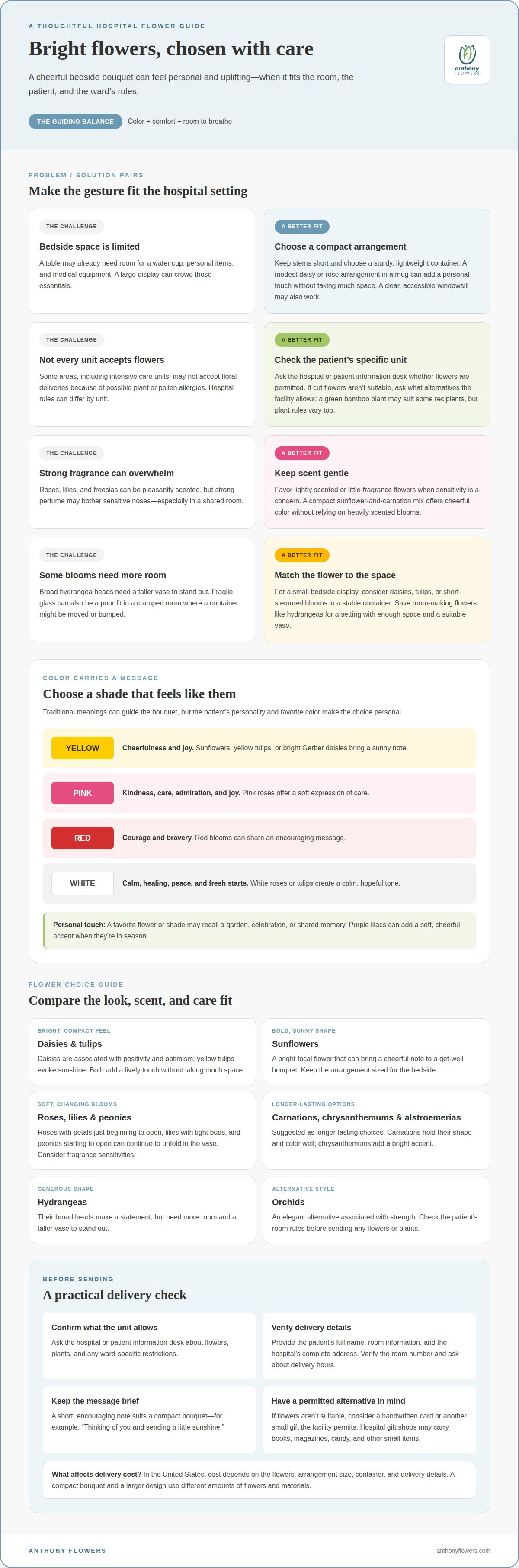
A hospital bedside table may need to hold a water cup, personal items, and medical equipment. Choose a compact bouquet or vase arrangement that leaves space for those essentials. A small display adds color without crowding the patient’s immediate surroundings. A windowsill may work if it’s accessible and clear.
Choose a sturdy, lightweight container that can handle being moved or bumped, and avoid fragile glass in a cramped room. A mug can hold a modest daisy or rose arrangement, adding a familiar, personal touch without taking up much space. Keep stems short so the flowers don’t spill across the table. Orange blooms or chrysanthemums add a bright accent, while hydrangeas need more room to stand out.
How can you check a hospital’s flower delivery policy? Contact the hospital or its patient information desk to ask whether flowers are permitted in the patient’s specific unit. Some areas, including intensive care units, may not accept floral deliveries because of possible plant or pollen allergies.
Are potted plants allowed in hospitals, and are they suitable gifts? Hospital rules vary, so find out whether the patient’s room accepts plants before sending one. A green bamboo plant may be a suitable alternative for someone with allergies or who can’t have cut flowers in the room.
What information is needed to send flowers to a hospital patient? Include the patient’s full name, room information, and the hospital’s complete address. Verify the room number and ask about delivery hours. Accurate details help the flowers reach the intended patient.
Add a brief, encouraging message that suits the patient. For example, “Thinking of you and sending a little sunshine” pairs naturally with yellow daisies. If flowers aren’t suitable, the Internal Revenue Service notes that hospital gift shops may sell books, magazines, candy, and other small items.
Best Flower Colors for Someone in the Hospital
Color can share a warm message before the patient reads the card. Yellow flowers suggest cheerfulness and joy, while pink blooms express kindness, care, admiration, and joy. Both shades brighten a hospital room without an elaborate design. Choose a color that suits the patient’s personality, not just its traditional meaning.
For a sunny bedside table, consider sunflowers or bright Gerber daisies. Daisies are often associated with positivity and optimism, while yellow tulips evoke sunshine. Pink roses offer soft admiration. White roses suggest calm and healing, and white tulips can represent peace and fresh starts. A florist can use these meanings to help shape a thoughtful bouquet and message.
- Yellow: Pair sunflowers or yellow tulips with a note of encouragement.
- Pink: Choose pink roses to convey gentle care and admiration.
- Red: Use red blooms to express courage and bravery.
- White: Select white tulips or roses for a calm, hopeful tone.
Purple lilacs add a soft, cheerful accent when they’re in season. A patient’s favorite flower or color is often the most personal choice, especially if it recalls a garden, celebration, or shared memory. These details make classic colors feel individual rather than formal.
If the hospital doesn’t allow flowers, send a handwritten card or another small gift the facility permits. Some areas, including intensive care units, don’t accept floral deliveries because of possible plant or pollen allergies. Unit policies determine what can enter a patient’s room, so don’t assume every ward accepts the same gifts.
Hospital flower delivery costs in the United States depend on the flowers, arrangement size, container, and delivery details. A compact bouquet and a larger design use different amounts of flowers and materials, which affects the total.
3. Flower choices including sunflowers, roses, lilies, peonies, and hydrangeas
Sunflowers bring a bold, sunny shape to a get-well bouquet, while daisies offer a lighter look. Both are thoughtful ways to remind someone you’re thinking of them. For cheerful flowers to send to a hospital patient, choose blooms that suit the room and recipient, not simply the largest or most dramatic stems.
Roses, lilies, and peonies change as they open, so consider their stage of bloom. Select roses with petals just beginning to open and lilies with tight buds that can unfold over the next few days. Peonies look lovely as they start opening, with soft, layered petals that continue to bloom in the vase. Hydrangeas make a generous statement, but their broad heads need a taller vase to stand out.
Orchids offer an elegant alternative and are associated with strength. Chrysanthemums, carnations, and alstroemerias are suggested as longer-lasting choices, while carnations hold their shape and color well. If allergies are a concern, choose flowers with care and consider whether the patient can have them in the room. Still, hospitals may restrict flowers in areas where plant or pollen allergies are a concern.
Fragrance matters, too. Roses, lilies, and freesias can smell pleasant, but strong perfume may bother sensitive noses. Choose a lightly scented arrangement, or favor flowers with little fragrance if the patient shares a room. A florist can help balance color, scent, and variety for a beautiful arrangement that doesn’t overwhelm the bedside.
Before sending flowers to someone in the hospital, consider the patient’s sensitivities and the ward’s rules. A compact sunflower-and-carnation mix offers cheerful color without relying on heavily scented blooms. It keeps the gesture warm and personal while making the flowers easier to enjoy in a hospital setting.
4. Choosing cheerful, hospital-friendly flowers
Good hospital flowers balance color, care needs, and available space. Yellow blooms bring a sunny note, and carnations hold their shape and color well in a vase. Daisies offer a cheerful, low-maintenance choice. For a simple arrangement, combine yellow carnations with a few daisies and add a short message wishing the patient well.
Consider how the patient will manage the flowers. Long-lasting, low-maintenance blooms can be easier to enjoy during a hospital stay, when energy is focused on recovery. Carnations and chrysanthemums are suggested as longer-lasting options. White orchids can last at least a week in a vase, adding an elegant accent without requiring a large bouquet. Choose a compact design that needs little attention.
Fragrance and pollen matter in shared spaces. Strong scents may bother sensitive noses, and some hospital areas restrict flowers because of possible plant or pollen allergies. A lightly scented mix of carnations and daisies is gentler than a heavily fragrant arrangement. Add a bright, personal card message, such as “Wishing you comfort and brighter days.” That detail makes the gift feel chosen for the patient, not simply picked from a display.
Do hospitals allow flowers in patient rooms? Policies vary by hospital and unit, and some areas, including intensive care units, may not accept floral deliveries because of possible plant or pollen allergies. Find out whether the patient’s ward permits flowers before arranging delivery, so they can reach an appropriate room.
For a cheerful, compact floral gift, explore hospital flowers for a patient and choose a style that suits your message.
Alstroemerias are low in allergens and associated with friendship and devotion, making them a considerate choice for a shared setting. Iris flowers suggest a new day, a hopeful sentiment for a recovery message.
Red carnations are a suitable choice because they hold their shape and color well in a vase, last a long time, and need minimal care. Long-lasting, low-maintenance flowers and plants let patients enjoy the blooms at home and focus their time and energy on recovery. Daisies also offer sunny color with little upkeep.
Anthony Flowers: Anniversary Flowers
Anthony Flowers offers Get Well Flowers for sending encouragement to someone in the hospital. Choose a bright arrangement and add a warm message to remind them they’re in your thoughts. Use the guidance above on compact sizes and colors to choose a cheerful, considerate gift.
Let the occasion guide your floral message. Get Well Flowers suit a patient’s recovery, while Birthday Flowers mark a celebration during a hospital stay. Anniversary Flowers recognize a couple’s milestone, and Sympathy & Funeral Flowers express support during loss.
For a hospital gift that reflects your relationship and the reason you’re sending it, contact Anthony Flowers.
Let a Thoughtful Gesture Speak for You
A hospital visit can change the rhythm of an ordinary day, and a thoughtful gesture can remind someone they’re not facing it alone. Let your relationship guide the message: cheerful flowers to send to hospital patients can express encouragement, affection, or a simple “I’m thinking of you.” A few personal words on the card make the sentiment unmistakably yours.
Anthony Flowers offers Anniversary Flowers, Birthday Flowers, and Sympathy & Funeral Flowers for meaningful moments and messages of care. Choose the occasion that best reflects what you want to say, then shape your note around a shared memory, a warm wish, or a little encouragement.
Contact Anthony Flowers for help choosing a thoughtful floral gesture. Your message can bring a welcome moment of connection and brightness.
Frequently Asked Questions
What color flowers do you get for someone in the hospital?
Yellow or pink flowers make a bright, caring choice, while the patient’s favorite color adds a personal touch. For a simple palette, pair yellow blooms with soft white accents or pink flowers with greenery. A color the patient enjoys can make the gift feel familiar during an unfamiliar hospital stay.
What flowers are considered cheerful for a hospital patient?
Sunflowers and daisies offer a lively look, while daffodils can suggest fresh starts and recovery. Choose blooms that fit the patient’s taste and the sentiment you want to share. A few daffodils, for example, can accompany a note about looking ahead, offering encouragement beyond the hospital room.
Which flowers are safe and low-scent for hospital rooms?
Carnations, orchids, and chrysanthemums are identified as lower-allergen flower choices, though no flower is suitable for every patient or ward. For a low-scent arrangement, request lightly scented blooms and avoid heavily perfumed flowers. Hospital units may restrict floral deliveries because of plant or pollen allergies, so follow the room’s policy before sending a gift.
Which hospital units prohibit flowers, such as ICUs or oncology wards?
Some areas, including intensive care units, may not accept flower deliveries because of possible plant or pollen allergies. Check the patient’s specific unit’s policy; no specific rule for oncology wards is provided.


